Skorba Temples: Visiting Malta's Mġarr Prehistoric Site
Skorba temples in Mġarr are a small megalithic site with a Neolithic settlement. Here is what survives, why it matters, and how to fit it into a temple day.
On this page
Skorba is a short stop, not a half-day out: a three-apsed megalithic temple with an adjoining Neolithic settlement in Mġarr, on Malta's main island. Give it 20 to 30 minutes on the ground, and pair it with Ta' Ħaġrat in the same village. This guide covers what survives, how the plan reads when you are standing in it, why the site matters in the sequence of Maltese temple building, and how to slot it into a day built around the megalithic temples Malta is known for.
What the Skorba site actually is
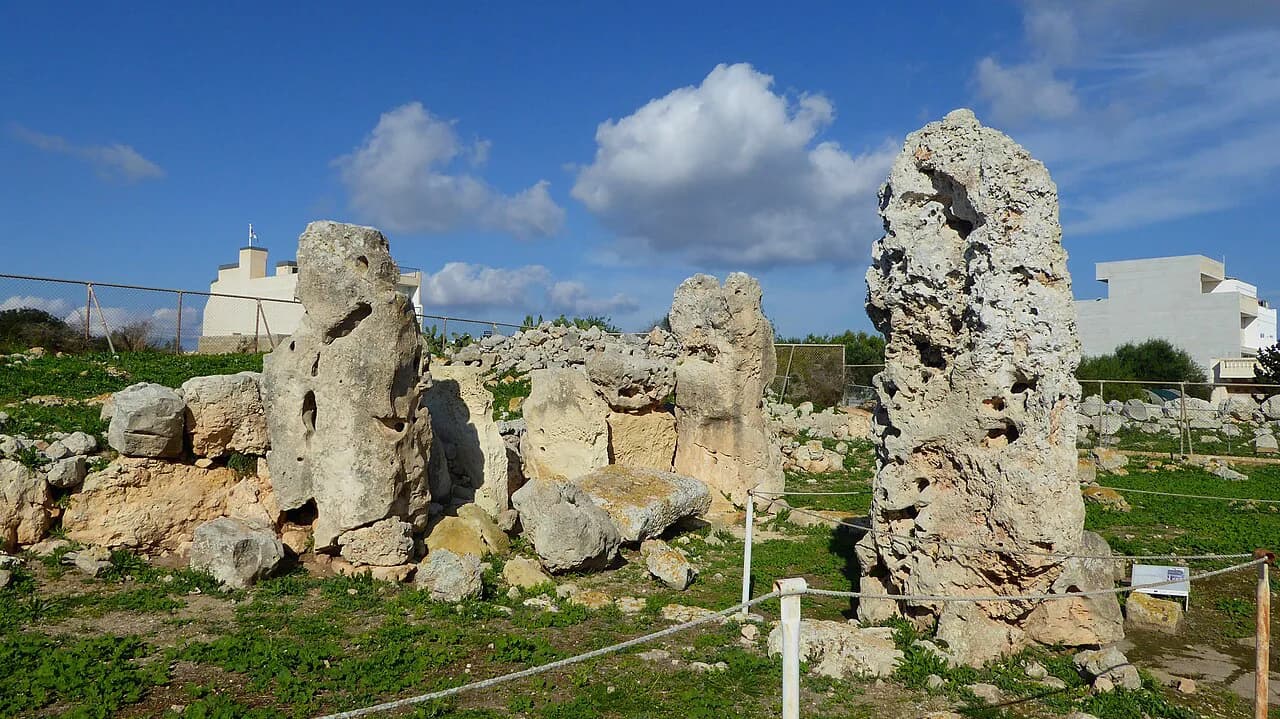
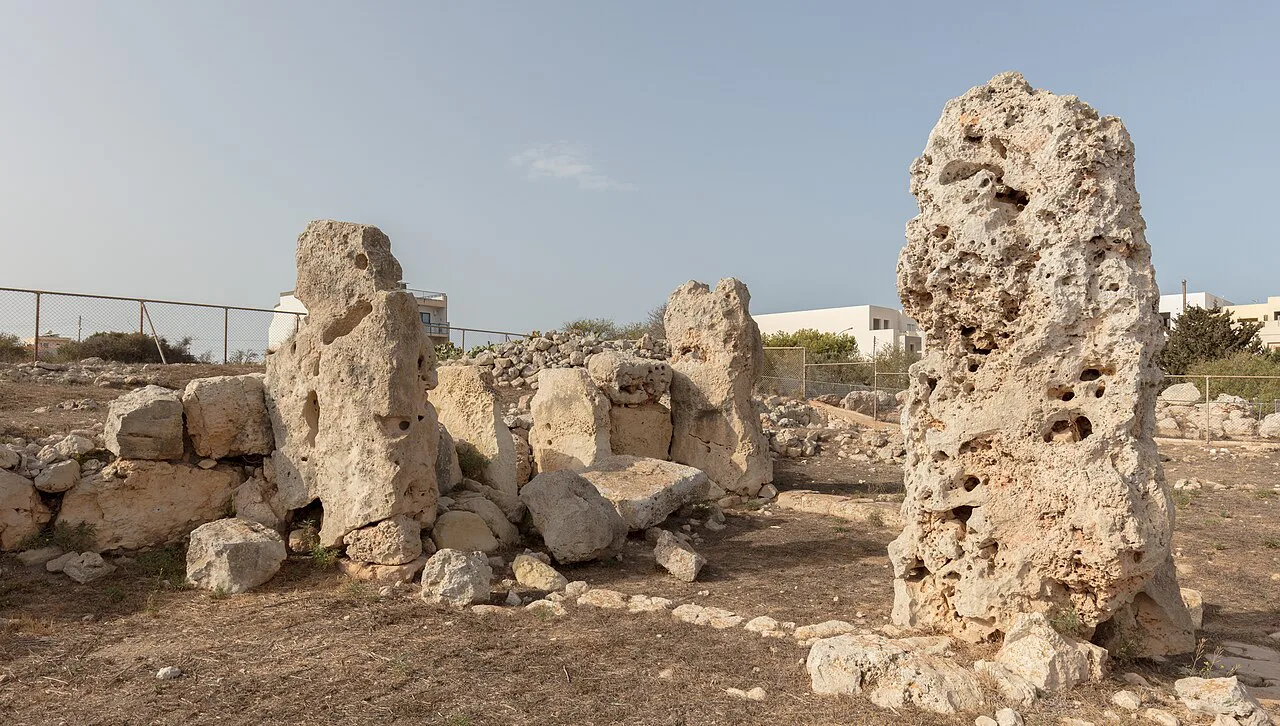
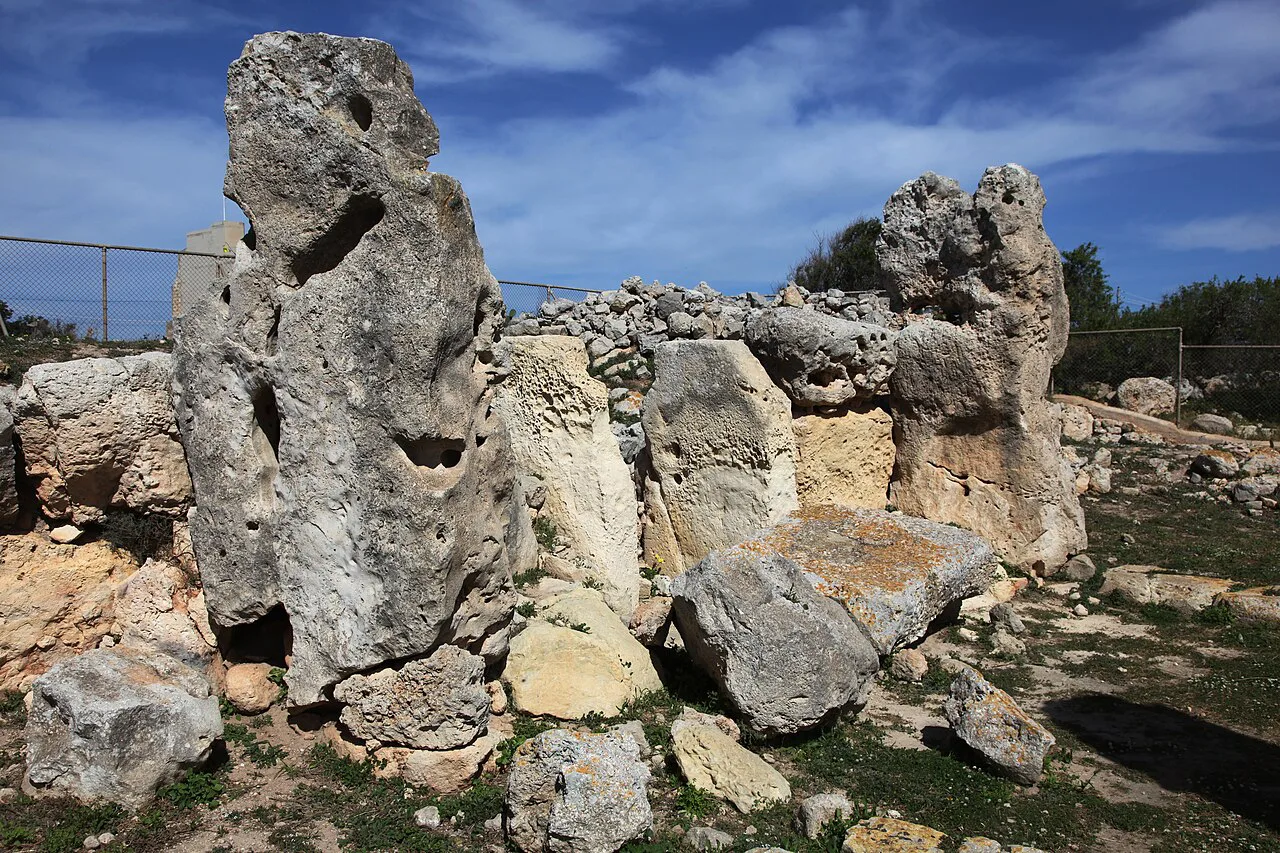
Skorba combines two things that visitors often blur together: a megalithic temple of the three-apsed type, dated to roughly 3600 to 3200 BC, and a separate Neolithic settlement area beside it. Treat them as distinct remains as you walk the site, because the settlement is where much of the pottery sequence that names the temple phases came from. The excavation report describes two adjacent temples, so the remains are low and fragmentary rather than standing chambers.
Mġarr sits in the north-west of Malta, inland from the coast and within reach of the larger temple groups. The site is a rural one, and the village itself is the obvious landmark for orientation. VisitMalta lists Skorba under its attractions, though the page carried no opening hours or ticket details when it was captured, so confirm current access arrangements with the operator before you travel.
Reading the stones: the trefoil plan and the three-apsed form
Maltese temples were built to a cloverleaf, or trefoil, floor plan: hemispheric chambers, called apses, branching off a narrow entrance path, with walls of coralline limestone built up by corbelling. The Skorba temple develops that idea into a three-apsed arrangement, so the shape you are tracing on the ground is a more formal version of the earlier layout. Knowing this before you arrive turns a scatter of stones into a legible plan.
Walk to the entrance path first and follow the curve of each apse outward rather than trying to find a single facade. The apses were incomplete domes, broad at the base and drawn in towards the top, and the gaps were roofed with hides on timber poles, so nothing overhead survives to look at. At Skorba the reward is the plan and the setting, not carved masonry or height.
Why Skorba matters in the temple sequence
The Maltese sequence runs from the Neolithic into the Temple Period, which the archaeological chronology places at about 4100 to 2500 BC, before the Bronze and Iron Age. Within that span the Ġgantija phase, roughly 3600 to 3000 BC, is when temple construction began simply and grew more elaborate, and the Saflieni phase and Tarxien phase follow. Skorba's value is that it lets you see an early, modest expression of the form before you meet the grander sites.
The three pottery phases that structure early Maltese archaeology take their names from Skorba and a nearby cave: Għar Dalam ware with geometric patterning, then Grey Skorba, a plain grey undecorated pottery, and then Red Skorba, coated in bright red. That naming is why a site this small carries weight out of proportion to its size. If the pottery sequence interests you, the cave that gives the first phase its name is worth adding to the same trip.
How long Skorba needs, and whether to combine it
Budget under half an hour at Skorba itself unless you are working through the plan stone by stone, and treat the exposed, unshaded ground as the main constraint on timing. Midday heat makes a small site feel longer than it is, so an early or late slot suits it better. The realistic plan is to see Skorba and Ta' Ħaġrat in the same Mġarr visit and keep the bigger sites for their own block of time.
If you are choosing between the large temple groups, Ħaġar Qim and Mnajdra on the south coast and the paired temples on Gozo deliver more standing structure, while Tarxien temples near the harbour show the later, more ornate phase. Skorba earns its place as the quiet first chapter rather than a headline. For the full set of sites and how they relate, work from the Megalithic Temples of Malta overview before you fix an itinerary.
The underground counterpart to the surface temples is the Ħal Saflieni Hypogeum at Raħal Ġdid, a structure hewn out of rock that the archaeological chronology describes as three storeys high and used for worship and burial in the Saflieni phase. It is a different experience entirely, and one to arrange rather than simply turn up for. Read the Hypogeum guide before you decide whether to build a day around it.
Getting to Mġarr and what to expect on site
Mġarr is reached by road from the direction of St Paul's Bay and Mellieħa or inland from the Attard and Mosta side, and the village centre gives you a base for both Skorba and Ta' Ħaġrat. Check the site's access arrangements for your dates before setting out, since this is a small site rather than a staffed complex. Carrying water and sun protection matters here more than at sites with a visitor centre to retreat into.
Expect a small rural site rather than a staffed complex: low remains, open ground, and the village around it. Skorba is best read as a set of ancient remains rather than as somewhere with facilities, so plan your comfort stop, shade and lunch in Mġarr village instead of on site.
For the wider story of the islands before the temples, from the first Neolithic farmers crossing from Sicily to the end of the Temple Period, read up on the prehistory of Malta before you set out. It is the right thing to absorb on the journey out rather than while standing in the sun.
Practical points: tickets, heat and the Mġarr church
Skorba belongs with the Megalithic Temples of Malta as a group, and a single ticket can cover several of the sites, so check the current price and what it includes at the point of sale before you build a day around it. Confirm the days Skorba is open before you travel; do not assume daily access.
There is little shade at Skorba, so a hat, water and a short visit are the sensible combination between late morning and mid-afternoon in the warmer months. The site suits sturdy shoes rather than sandals, since you are walking over uneven ground and low stone.
If you step into Mġarr's parish church, cover shoulders and knees and keep voices low, as you would at any Maltese church; a light layer in your bag handles it. Churches are working places of worship, so avoid visiting during services.
Is Skorba worth adding to a temple day?
Add Skorba if you are already going to Mġarr for Ta' Ħaġrat or you want the potsherd-level story behind the temple phases; skip it if this is your only temple stop in Malta. The site gives you the three-apsed plan in a quiet setting, but the standing architecture and the visitor infrastructure are at the larger sites.
Build the day around one large group, such as Ħaġar Qim and Mnajdra or the Ġgantija Temples in Xagħra, Gozo, and use Mġarr as a short, early stop on the way. Confirm opening days and ticket details before you set out, then let the heat decide how long you linger.
Frequently Asked Questions
How old are the Maltese temples?
The Maltese temple chronology places the Temple Period at about 4100 to 2500 BC, with temple construction beginning in the Ġgantija phase around 3600 to 3000 BC and growing more elaborate through the Saflieni and Tarxien phases. Skorba's three-apsed temple is dated to roughly 3600 to 3200 BC, an early, modest expression of the form.
Who is the goddess of Malta?
The temple builders left small female figurines, including the 'fat' woman type found at Ħaġar Qim and known as the Venus of Malta, which is read as a fertility symbol. There is no named goddess in the record: the first inhabitants left no writing, so the 'mother goddess' idea rests on the statuettes and on comparison with similar finds elsewhere in the Mediterranean.
Is Skorba a good alternative to Ħaġar Qim?
No, if you want standing architecture and an organised visitor experience. Skorba is a small rural site with low remains and an adjoining settlement, best used as a short addition when you are already in Mġarr. Choose Ħaġar Qim and Mnajdra for the main temple visit.
Sources
Notes for your Malta trip
Optional updates when we add or correct a Malta or Gozo guide.
You might also like
Continue reading
More guides you'll find useful