Megalithic Temples of Malta: Which to Visit and How to Plan
The megalithic temples of Malta and Gozo, from Ħaġar Qim and Mnajdra to Ġgantija and the Ħal Saflieni Hypogeum, and how to combine them in a day.
On this page
If you have one day for the megalithic temples of Malta, spend it in the south on Ħaġar Qim and Mnajdra, and put Ġgantija on a separate Gozo day. Add the Ħal Saflieni Hypogeum only if you can secure a slot, because it is an underground complex with tightly controlled entry rather than an open-air ruin.
This guide sets out what the temples actually are, how the archaeology is dated, which sites are worth your time and how to group them geographically so you are not crossing the island twice. It also covers the Hypogeum fee and why the open-air temples need a different approach in the middle of the day.
What Malta's megalithic temples are
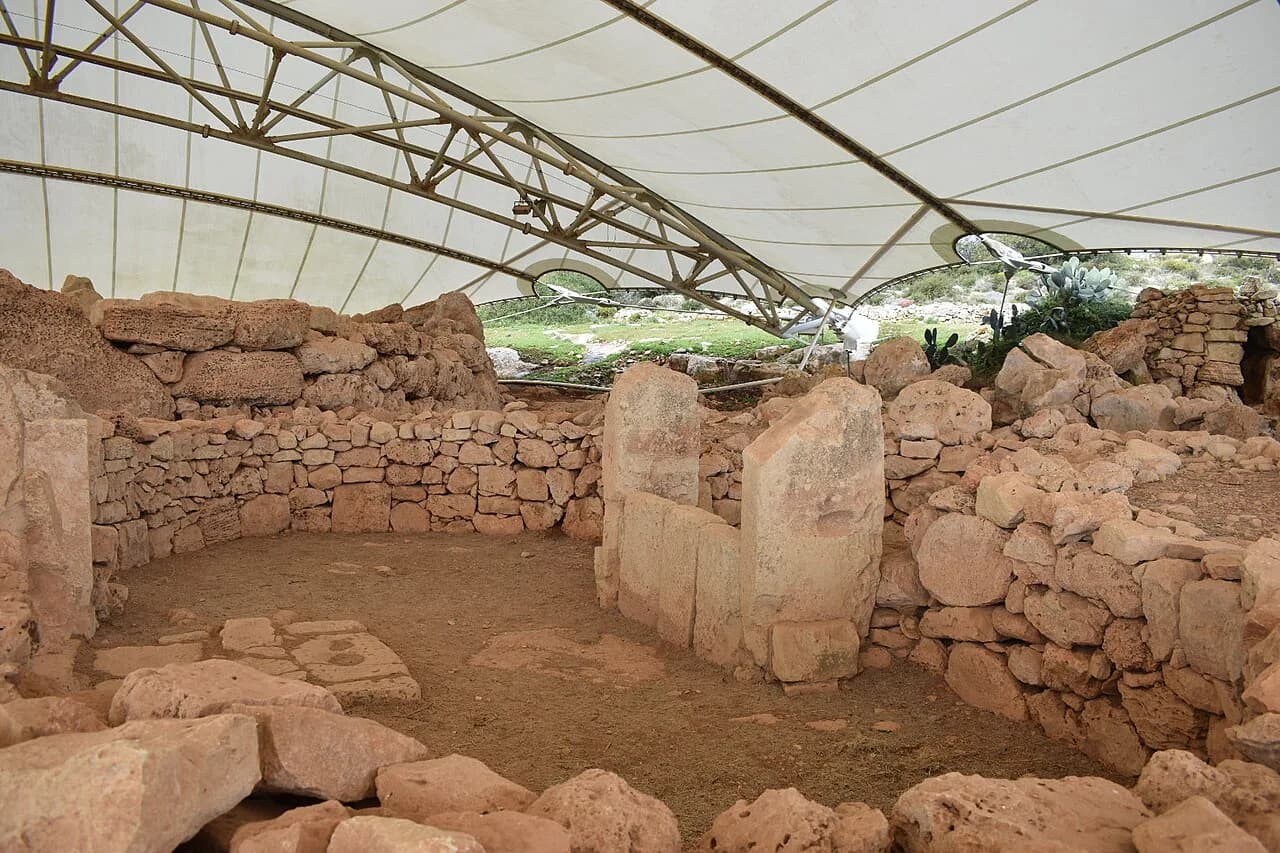
The temples are stone buildings raised by Malta's Neolithic farmers, constructed in coralline limestone rather than brick or timber. Their floor plan is typically a cloverleaf or trefoil shape, with hemispheric chambers called apses branching off a narrow entrance path.
The apses were built by corbelling stone inward, broad at the base and curving towards the top, which means a true dome could not be completed; the roofs were closed with animal hides hung from timber poles. Entrances and doorways used the trilithon, a post-and-lintel arrangement of two uprights and a spanning block. Look for these elements on site and the ruins stop looking like piles of stone.
Expect small interiors. The chambers do not have room to hold more than a few people at a time, so large public gatherings inside the temples were not possible. The scale that impresses is the overall footprint and the stonework, not the volume of any single room.
If you want the wider sequence before you go, our overview of Malta prehistory puts the temple builders alongside the earlier cave deposits and the later Bronze Age arrivals. It is useful reading for the drive south, when the sites themselves offer limited interpretation.
How old the temples are
The Temple Period runs from roughly 4,100 to 2,500 BC in the cited chronology, following the arrival of Neolithic farmers from Sicily around 7,000 years ago. Temple construction begins in the Ġgantija phase, about 3,600 to 3,000 BC, and becomes most sophisticated in the Tarxien phase of 3,000 to 2,500 BC.
The Ħal Saflieni phase, around 3,300 to 3,000 BC, is the point at which the Hypogeum was cut into rock as a three-storey structure used for worship and burial. The Tarxien phase then produced the immense blocks and intricate facades at Ħaġar Qim, Mnajdra and Tarxien itself. Knowing the phases helps you see why the later temples look more elaborate than the earlier ones.
The temple builders disappear from the record around 2,500 BC, and the cited archaeology treats the cause as speculative rather than settled. A Bronze Age people succeeded them, which is the point at which the story moves on from temple building to other settlements.
Ħaġar Qim and Mnajdra: the south Malta pair
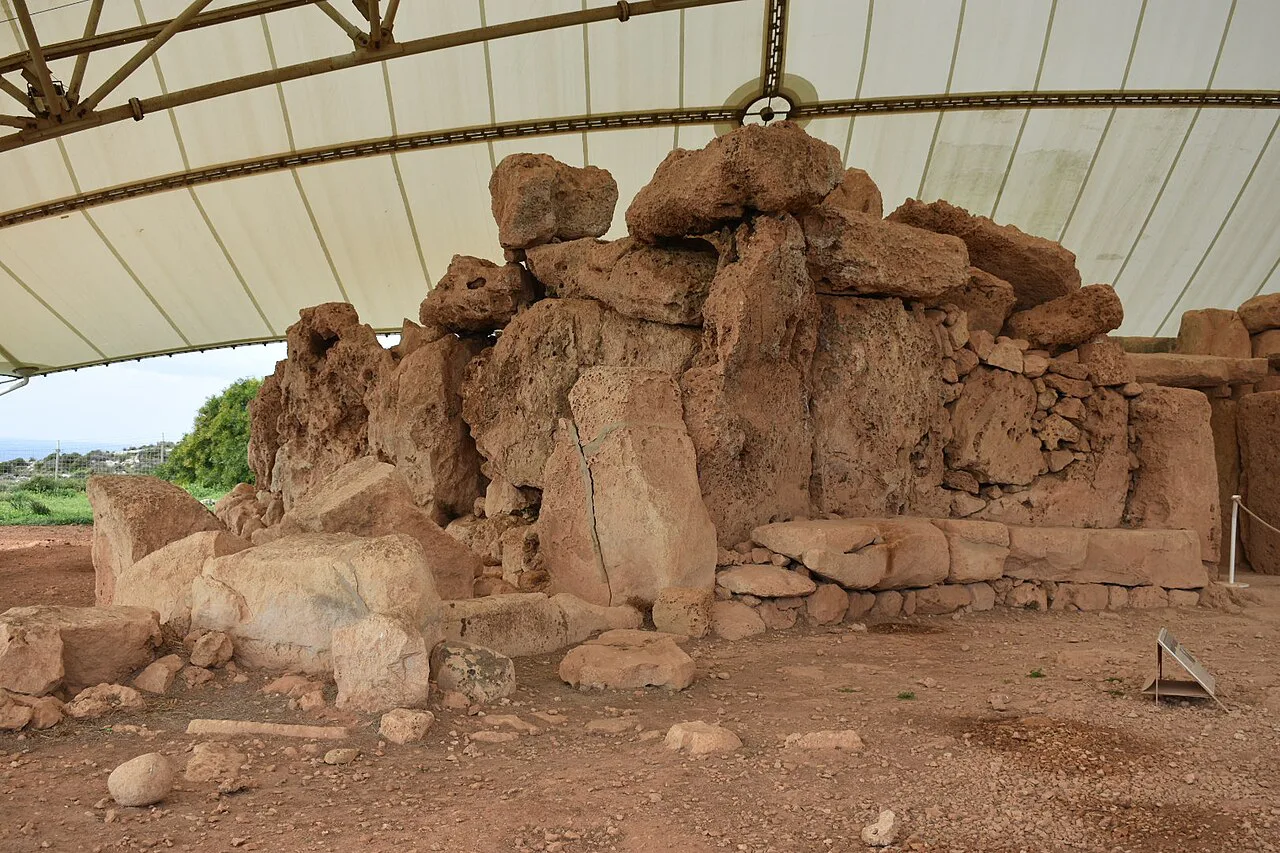
Ħaġar Qim and Mnajdra sit within easy reach of each other in the south of Malta, so they combine naturally in a single visit rather than two separate trips. Mnajdra stands on a clifftop position and is the more dramatically sited of the two, while Ħaġar Qim is a limestone temple complex with elaborate facades and the carved detail of the Tarxien phase.
Mnajdra's alignment is the reason many visitors make the trip: the temple's orientation has an astronomical purpose that shows how deliberate the design was. Treat that as the reason to linger at the site rather than rush between the two car parks. Our guide to Ħaġar Qim and Mnajdra covers the layout of both in more detail.
The Venus of Malta figurine found at Ħaġar Qim is the type of corpulent female figure that appears across these temples as a fertility symbol. If you have seen photographs of a small carved woman and wondered where she came from, this is the site.
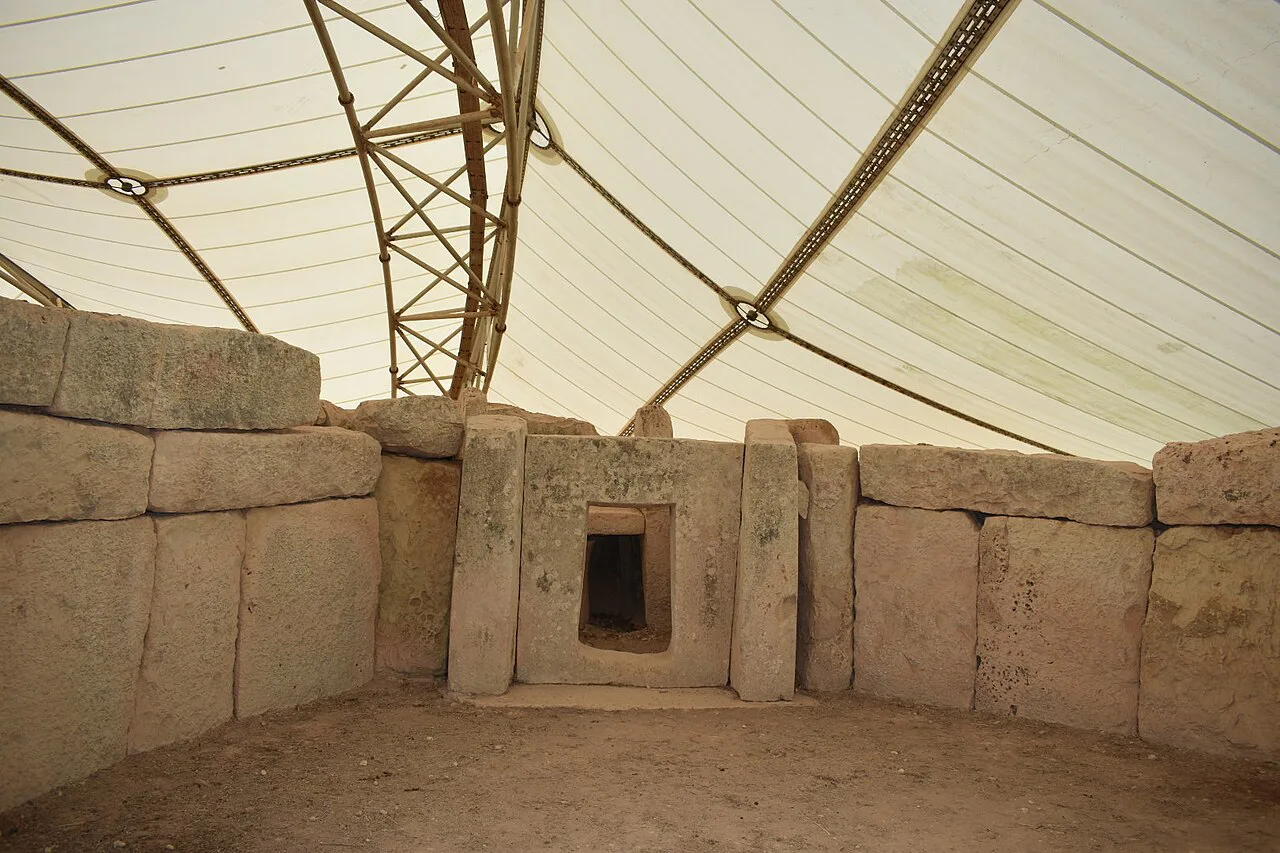
Ġgantija Temples in Xagħra, Gozo
Ġgantija Temples, Gozo stand at the end of the Xagħra Plateau near the village of Xagħra, and the pair of Neolithic temples is one of the highlights of a trip to the island. They are reached by crossing to Mġarr and driving or taking transport up to Xagħra, so they belong on a Gozo day rather than a south Malta itinerary.
The Ġgantija phase takes its name from this site, and the cited chronology places temple construction from about 3,600 BC, so you are looking at the earliest phase of the building tradition rather than its most refined end. That makes Ġgantija a different experience from Ħaġar Qim: heavier, earlier, and set in open Gozo countryside.
Ġgantija Temples in Xagħra, Gozo also make a sensible anchor for a wider Gozo day that includes the village itself and the plateau views. Plan the crossing and the drive as one block, because the ferry is the fixed point in the day.
The Ħal Saflieni Hypogeum: a different booking problem
The Ħal Saflieni Hypogeum is a rock-cut complex in Raħal Ġdid, hewn three storeys high and used for both worship and burial during the Saflieni phase. It is not an open-air temple: there is no clifftop, no trilithon facade and no walking between separate structures. What you get instead is an underground sequence of chambers, which is why the visit feels unlike anything else on this list.
A published account of Malta's ancient sites rates the Hypogeum as worth the relatively high entrance fee and gives that fee as €30, which you should confirm for your own dates before booking. Because entry is limited, treat the Hypogeum as a timed slot you secure first and fit everything else around.
Our Ħal Saflieni Hypogeum guide covers what the underground chambers involve and how the visit is organised. If you cannot get a slot, the Tarxien temples nearby deliver the same phase of temple building above ground.
Tarxien Temples and pairing with the Hypogeum
Tarxien temples form a large complex from the Tarxien phase, the peak of temple building, and excavation there has continued over time. They are often visited alongside the Hypogeum because both sit in the same part of the south-east, which makes a natural half-day pairing.
Tarxien rewards people who want to look closely at stonework rather than tick off a viewpoint. The site is the one to choose if the process of excavation and reading a complex floor plan interests you more than a dramatic setting. Our Ħal Tarxien Prehistoric Complex page sets out what to look for among the temples.
The smaller sites: Skorba, Ta' Ħaġrat, Għar Dalam and Clapham Junction
Skorba temples are less visually impressive than Ġgantija but still rewarding, and the site matters because the Skorba pottery phases give the chronology its early markers. Ta' Ħaġrat, near Mġarr in Malta, consists of two small temples that count among the earliest built on the islands, set in countryside rather than a visitor complex.
Għar Dalam Cave and Museum is a different proposition: a cave deposit with a museum holding the bones of ancient elephants and hippos alongside evidence of Malta's earliest settlement. It is the site to choose if the natural history angle appeals more than megaliths. Our Għar Dalam guide covers the cave and collection.
Clapham Junction is the nickname for the cart ruts cut into limestone, so called because the grooves are so numerous they resemble the London railway junction. The ruts appear widely across Malta rather than at one fenced monument, so treat them as something you notice in the rock rather than a destination with a gate.
How to plan a temples day
Group the south Malta sites into one day: Ħaġar Qim and Mnajdra together on the coast, then Tarxien and the Hypogeum in the south-east if you have slots for both. Give Gozo its own day, crossing to Mġarr and heading up to Xagħra for Ġgantija rather than trying to squeeze it in after a morning in Malta.
A car gives you the most control over the south, where the sites are spread out and public transport connections are not the point of the trip. If you are relying on buses, base the day around fewer sites and accept that Tarxien and the Hypogeum are the easier pair to combine, since they sit close together. From the Valletta area, the Floriana terminal is the main hub for routes out to the south and east.
Book the Hypogeum first, then build the rest of the day around that slot, and keep the open-air temples flexible for the cooler ends of the day. That single ordering decision saves the most time, because everything else can shift.
Tickets and costs
The Hypogeum is the one site in this guide with a cited entrance fee, at €30 per the published account linked above, so confirm the current figure and booking terms directly with the site before you commit.
For Ħaġar Qim, Mnajdra, Ġgantija, Tarxien, Skorba, Ta' Ħaġrat and Għar Dalam, check the official ticketing pages for prices and any combined passes rather than assuming a single island-wide ticket exists. Buy the Hypogeum slot before the open-air sites, because that is the one that constrains the day.
Heat and timing at open temple sites
Ħaġar Qim and Mnajdra are exposed coastal sites with little shade, and the walk between them is the part most people underestimate. Go early or late, carry water, and treat the middle of the day as the time for the Hypogeum or a museum rather than open stone.
Ġgantija is similarly open, so the Xagħra Plateau is better in the morning before the crossing back. Build in a proper stop afterwards rather than driving straight to the ferry, and Valletta and St Julian's are the obvious places for a late lunch if you are heading back east.
Ġgantija or Ħaġar Qim if you only have time for one
Choose Ħaġar Qim and Mnajdra if you are based in Malta and want the most temple architecture in one trip: two sites, a clifftop setting and the carved detail of the later phase. Choose Ġgantija if you are already spending a day on Gozo, because the crossing justifies the visit and the Xagħra setting is part of the experience.
If you want the earliest phase of temple building rather than the most elaborate, Ġgantija is the one, since the phase is named after it. If you want the version most visitors picture when they think of Malta's temples, go south.
Dress and getting between sites
These are outdoor archaeological sites rather than churches, so the practical dress code is about sun and footing: covered shoulders, a hat and shoes that handle uneven stone. Gozo's villages and the churches near the sites do expect covered shoulders and knees, and a light layer is the easy way to meet both.
Distances in the south are short by car but slow by bus, and the Gozo crossing adds a fixed overhead that no amount of planning removes. Allow slack at both ends of the day rather than stacking a Hypogeum slot against a ferry return.
Which temples day should you book first?
Book the Ħal Saflieni Hypogeum slot first if you want it, then plan the south Malta day around Ħaġar Qim, Mnajdra and Tarxien in the time left. Give Ġgantija its own day on Gozo, and pick between the two only if your trip is genuinely short.
Before you go, confirm current prices and opening days with each site, since hours change with the season. That done, the geography decides the rest: south Malta in one day, Gozo in another.
Explore more Malta guides
Frequently Asked Questions
What is the name of the prehistoric temple in Gozo?
The two Neolithic temples on Gozo are Ġgantija, on the Xagħra Plateau near the village of Xagħra. The Ġgantija phase of temple building takes its name from the site.
Are the megalithic temples of Malta older than the pyramids?
The cited archaeology dates Malta's Temple Period from about 4,100 to 2,500 BC, with temple construction beginning in the Ġgantija phase around 3,600 BC. The comparison with Egypt's pyramids is common in accounts of the temples, but this guide sticks to the cited chronology.
Can I visit the Hypogeum and the temples in one day?
It is possible to combine the Ħal Saflieni Hypogeum with Tarxien, which sits nearby, in a half-day. Adding Ħaġar Qim and Mnajdra as well makes for a long, hot day with a timed slot to hit, so most visitors are better off splitting the south Malta sites across a full day and leaving Gozo separate.
Do I need to book temple tickets in advance?
The Hypogeum is the site where a timed booking matters most, given controlled underground entry. For the open-air temples, check the official ticketing pages for current prices and any combined passes before you travel.
Sources
Notes for your Malta trip
Optional updates when we add or correct a Malta or Gozo guide.
You might also like
Continue reading
More guides you'll find useful