Tarxien Temples: What to See and How to Visit
The Tarxien Temples hold spiral carvings and a colossal statue in the middle of a modern town. Here is what survives, how long it takes and how to get there.
On this page
The Tarxien Temples are worth 45 to 90 minutes of your day, and the reason is the carving: running spirals, processions of animals and a colossal skirted statue, all inside a modest walled site in the middle of a residential town. Four linked megalithic structures were raised here between roughly 3600 and 2500 BC, and three are still standing. This guide covers the layout, what to look for inside, the originals now in Valletta, and how to reach the site and combine it with the Hypogeum.
What the Ħal Tarxien Prehistoric Complex is
Four megalithic structures were built at Tarxien in the late Neolithic, and the complex was later reused in the Early Bronze Age. The earliest building, the East Temple, belongs to the Ġgantija phase, the same cultural horizon as the great temples on Gozo, before the Tarxien phase brought the South and Central structures, with the Central Temple the only one of its kind on the islands. The site sits within the wider group of UNESCO-listed megalithic temples Malta protects, so it works best as one stop in a prehistoric itinerary rather than a standalone day out.
The plan rewards a little patience. Passages between some areas are blocked by physical barriers, which suggests parts of the buildings were open only to part of the community. Doorways once held wooden screens, and rope holes at the entrances show where timber or rope sealed a doorway. Keep that in mind as you move from the open courts into the smaller inner chambers.
Where Tarxien sits
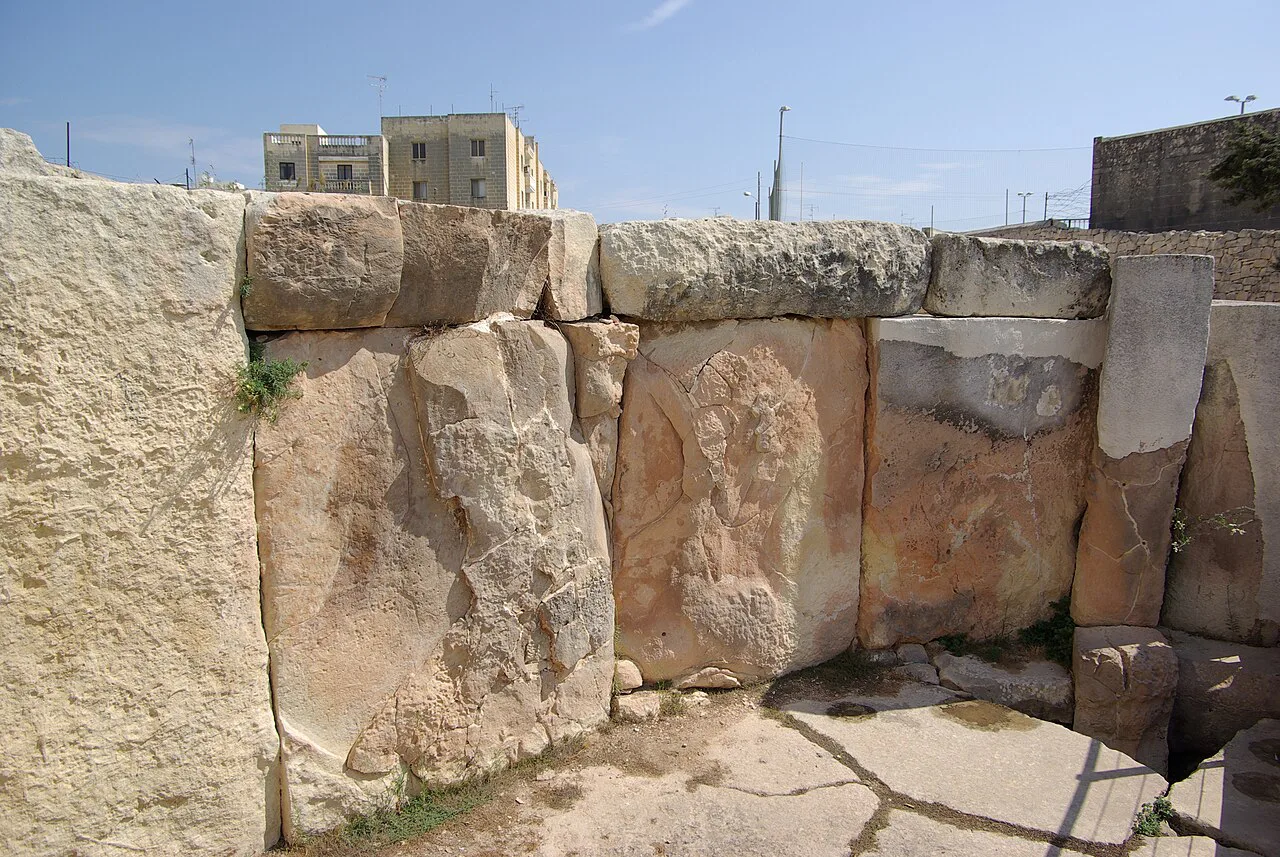
The temples stand in Tarxien village, about 5 km south of Valletta, with ordinary streets, houses and washing lines pressing right up to the fence. That setting is part of the experience: you step off a residential road and into deep prehistory under a protective canopy. Paola is a short walk away, so the site slots easily into a morning that also takes in the Hypogeum.
The layout: East Temple first, South Temple at the heart
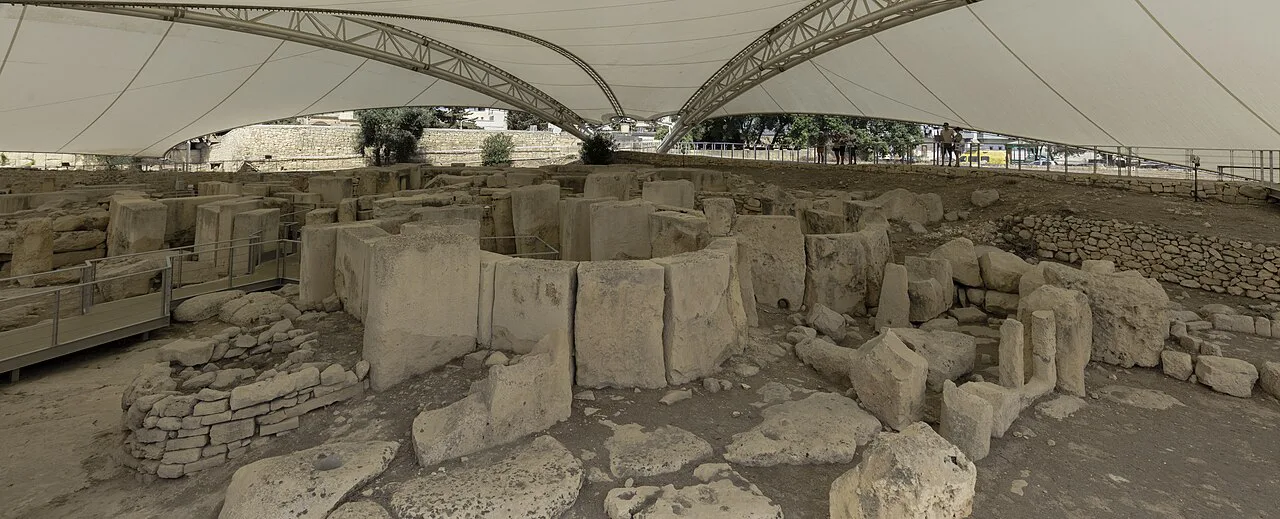
Walk the complex in chronological order and start with the East Temple, the earliest structure, built during the Ġgantija phase close to 3600 BC. It is not the most dramatic structure, but it roots the sequence in time and scale before the South Temple expands both. Working through the site in this order mirrors the way the complex grew.
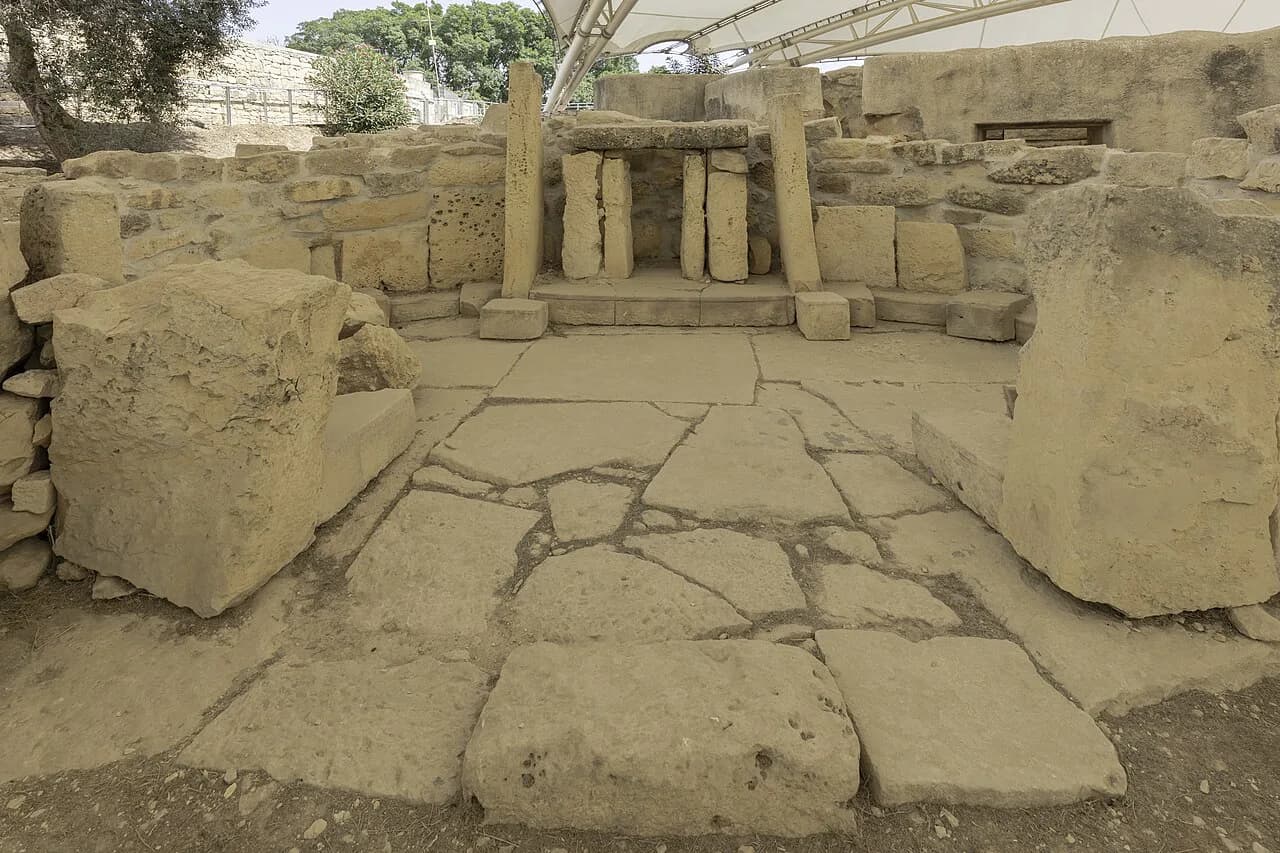
The South Temple is the climax, laid out on a six-apse plan and the most elaborate of the group. The Central Temple, with six curved rooms arranged in pairs and each smaller than the last, shows how the builders planned space for rituals. The main megalithic façade at the entrance is a 1950s reconstruction inspired by a typical trilithon doorway, so treat it as a frame rather than an original wall; the threshold stones under your feet are the genuine article.
What to look for inside
The carved surfaces carry the site's reputation. Running spirals cross screens and altars, some almost ominous and others pure geometry. Look for processions of animals in low relief: rams, sheep, a sow with litter and bulls, with a famous slab showing a line of animals that seem to lead toward sacrifice. Stone basins for libations remain in niches, and altars still bear the scars of fire.
Look down as well as up. Stone rollers left near the South Temple show how builders moved heavy blocks over rounded stones, a small detail that makes the engineering legible. Animal bones cluster near the altars, and excavations turned up sharp flint tools, so feasting and offering were not metaphors here.
The colossal skirted statue
Near the entrance of the South Temple stands the surviving lower half of a colossal statue: broad calves, a heavy pleated skirt and small feet, about 60 cm of stone. The upper body is long gone, but complete it may have reached roughly 2.5 metres, which the sources describe as Malta's largest known prehistoric sculpture. Early excavators called her the mother goddess or the Fat Lady; modern scholarship is more careful, and her identity is unknown.
Why the carvings look new
Many of the carved orthostats you see in place are replicas. The originals were moved to the National Museum of Archaeology in Valletta to protect them, along with statues of fertility figures. That is not a disappointment: the replicas let you read the spirals at eye level in the open air, and the museum in Valletta gives you the real slabs in a controlled setting. Pair the two on the same day if you can.
Discovery and excavation
In 1913 a farmer, Lorenzo Despott, kept hitting large blocks while ploughing his field, and he reported them. From 1915 Sir Themistocles Zammit spent four years excavating, uncovering the complex you walk through now. Later Bronze Age people used the ruins as a cremation cemetery, leaving clay urns filled with ashes, which suggests the place kept its hold on memory long after the temple culture ended.
How long to allow
Budget 45 to 90 minutes with the audio guide. The stone is uneven underfoot, so thick-soled shoes help, and shaded areas are sparse, which makes a water bottle essential in warmer months. Midday heat on the open limestone is the main reason to come early or late rather than at the peak of the day.
Getting there by bus
Buses from Valletta run south towards Paola and Tarxien, and the walk from the town centre to the temples is short but not scenic. Check the return stop before you set off, since the streets around the site are easy to lose your bearings in, and plan the journey with a look at how to get around without a car.
Opening hours and tickets
It is worth checking current hours and admission prices with Heritage Malta before you travel rather than relying on older figures. Visitor information has reported the site as open daily from 9am to 5pm, with earlier closing on 24 and 31 December. Allow time at the entrance for ticket checks.
Combining Tarxien with the Hypogeum
The Ħal Saflieni Hypogeum, an underground burial complex about 2 km north, holds artifacts from the same period and makes a natural pairing with Tarxien for a prehistoric half-day. Book Hypogeum slots well ahead: entry is limited and popular times go early. If the Hypogeum is full, Tarxien still stands on its own, and the Valletta museum covers the material you would otherwise see underground. Tarxien and the Hypogeum together tell the megalithic story above and below ground.
Accessibility and shelter
Metal roofs added in 2015 cover parts of the site, reducing weather damage without blocking the view of the chambers. Site information describes the complex as fully wheelchair accessible, though the stone surfaces remain uneven. If you have mobility concerns, ask at the entrance about the smoothest route through the temples.
Is Tarxien worth the detour?
Yes, if you care about carving and want a prehistoric site that fits into a short morning rather than a full day. The spirals, animal reliefs and the colossal skirted statue give you more to look at than most megalithic sites, and the town-centre location makes it easy to reach by bus. Pair it with the Hypogeum if you can book a slot, and with the Valletta museum to see the originals.
Explore more Malta guides
Frequently Asked Questions
Are the Tarxien Temples free to enter?
Admission is managed by Heritage Malta, which publishes current prices on its website. Check there before you travel rather than relying on older figures, since ticket costs can change.
How do the Tarxien Temples compare with Ġgantija on Gozo?
Both belong to the same UNESCO-listed group of megalithic temples, and Ġgantija is the earlier cultural horizon that the East Temple at Tarxien shares. Tarxien is the more elaborately decorated of the two and is far easier to reach from Valletta.
Can I visit Tarxien and the Hypogeum on the same day?
Yes, the two sites are about 2 km apart and make a natural prehistoric half-day. Book the Hypogeum well in advance, because entry is limited and popular slots sell out.
Is the colossal statue at Tarxien the original?
The lower half of the skirted statue stands at the South Temple entrance, while many carved slabs on site are replicas. The originals are held at the National Museum of Archaeology in Valletta.
Sources
Notes for your Malta trip
Optional updates when we add or correct a Malta or Gozo guide.
You might also like
Continue reading
More guides you'll find useful