Malta Independence: When It Happened and What It Means
Malta gained independence from Britain on 21 September 1964 and became a Republic in 1974. Here is what happened and where the story shows in Valletta.
On this page
Malta gained independence from Britain on 21 September 1964, and the date is still marked as a national holiday, Jum l-Indipendenza. This guide sets out what Malta was before that date, why the integration plan failed, what the Malta Independence Act changed, and where in Valletta and Floriana the story is easiest to follow on the day itself.
The dates matter because they are often run together: the 1956 referendum, the 1964 transfer of sovereignty and the Republic declared on 13 December 1974 are three separate events. Keep them apart and the rest of the article, including how to plan a Valletta day around the ceremonies, falls into place.
When did Malta gain independence from Britain?
Independence was granted on 21 September 1964, when Malta became a sovereign state after more than 150 years of British rule. The formal instrument was the Malta Independence Act, which put a new constitution in place and transferred power from British authorities to Maltese government structures, with George Borg Olivier recognised as Prime Minister.
Sovereignty did not end the Crown's role at once. Queen Elizabeth II continued as Queen of Malta until constitutional amendments came into force on 13 December 1974, when Malta became a Republic and Sir Anthony Mamo replaced the Queen as Head of State.
For the wider sequence of rulers before and after, from the Knights Hospitaller through the British period, the Malta History guide gathers the periods in order. That context helps when you are standing in front of a monument and want to place it in a single timeline, and the Knights' own story explains the fortifications you are walking past.
What Malta was before 1964: a British colony from 1814
Britain was invited into Malta in 1800 to expel the French, and full sovereignty over the islands was secured in 1814. From then until the Second World War, British rule reshaped education, law and social structures, and English was made one of Malta's two national languages alongside Maltese in 1936.
Malta's position between Europe and North Africa made it a base of strategic value, and the island was heavily bombed during the Second World War partly because of the British presence. Self-government was restored in 1947, after which Maltese politics split between those favouring integration with the UK and those seeking self-determination on the model enjoyed by Australia, Canada and New Zealand.
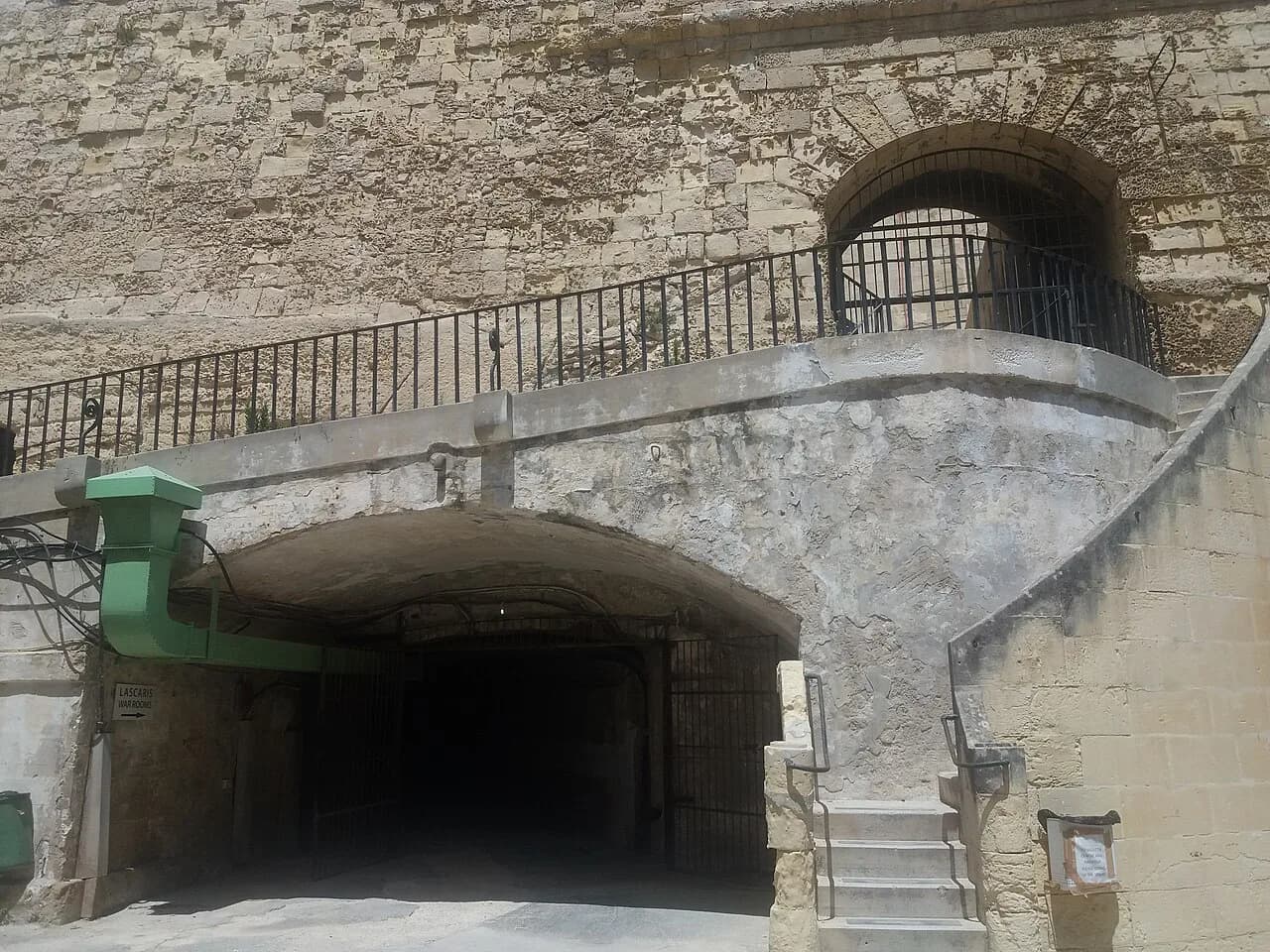
The wartime British headquarters sat in a tunnel network under Valletta known as the Lascaris War Rooms, and this is the wartime British site the story keeps returning to if that period interests you. The Great Siege of Malta, 1565 belongs to an earlier layer of the same defensive story and is worth reading before you walk the bastions.
Why independence came in 1964: the failed integration plan and the 1956 referendum
In the 1950s Malta considered integration with the UK on a footing similar to Northern Ireland and Scotland, and a national referendum in 1956 recorded 77% in favour of integration on a turnout of 59.1%. The result was treated as inconclusive because the Church and the Nationalist Party boycotted the vote, and the impetus shifted towards full sovereignty.
Negotiations with London followed, and independence arrived in 1964 while Britain kept military bases; the British military presence ended completely in 1979. That sequencing is why the island's post-1964 story is one of a small state managing larger geopolitical relationships rather than a clean break.
What the Malta Independence Act 1964 changed: constitution, languages and George Borg Olivier
The Act provided for Malta's new constitution, the transfer of power to Maltese governmental structures and recognition of George Borg Olivier as Prime Minister, and it established Malta as a sovereign nation within the Commonwealth of Nations. The new constitution also formalised Maltese and English as official languages.
Malta's membership of the Commonwealth is a legacy most visitors meet without noticing, in English-language signage and press. The eight-pointed Maltese cross on flags and church furnishings is a separate emblem from the independence settlement, and it long predates it.
From independence to Republic: 13 December 1974 and Sir Anthony Mamo
The Republic was declared on 13 December 1974, when amendments to the Maltese Constitution replaced the Queen as Head of State with a Maltese president, and Sir Anthony Mamo became the first to hold the office. Ten years separated the two moments, and both are now fixed reference points in the national calendar.
Independence Day is not simply a look backwards; it prompts the question of how sovereignty sits alongside European Union membership, a pairing the island manages as historical continuity rather than contradiction. That framing is useful when you read the speeches and commentary around the date.
How Independence Day is marked on 21 September: Floriana's Granaries and the Independence Monument
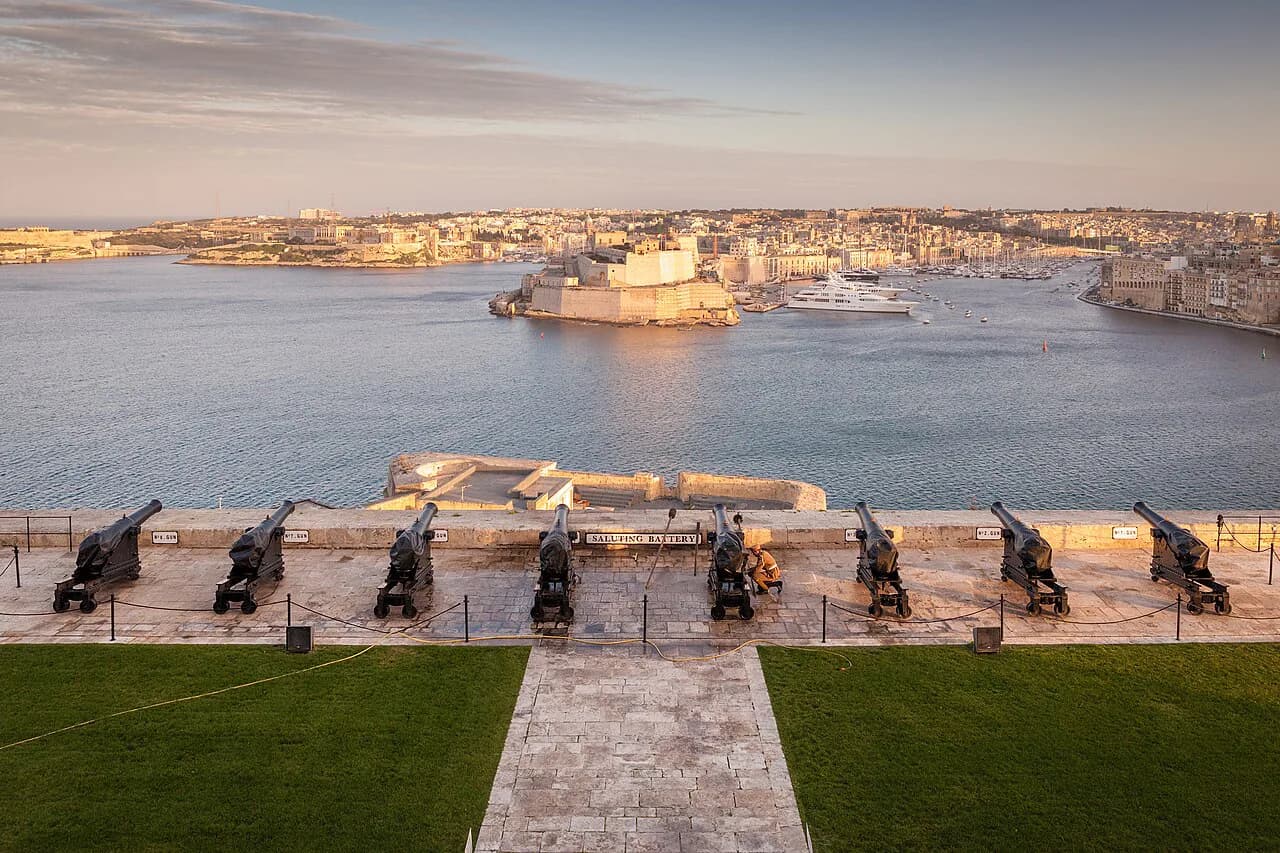
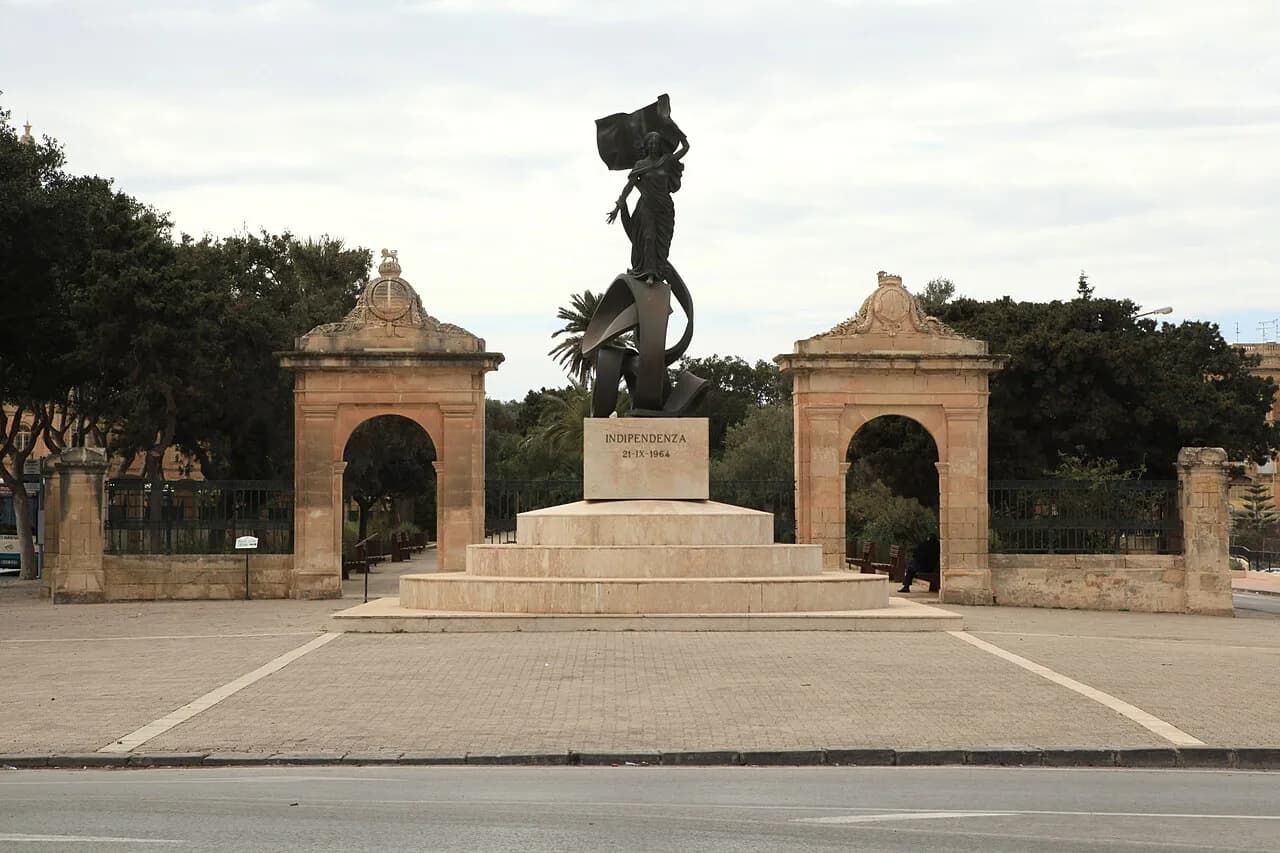
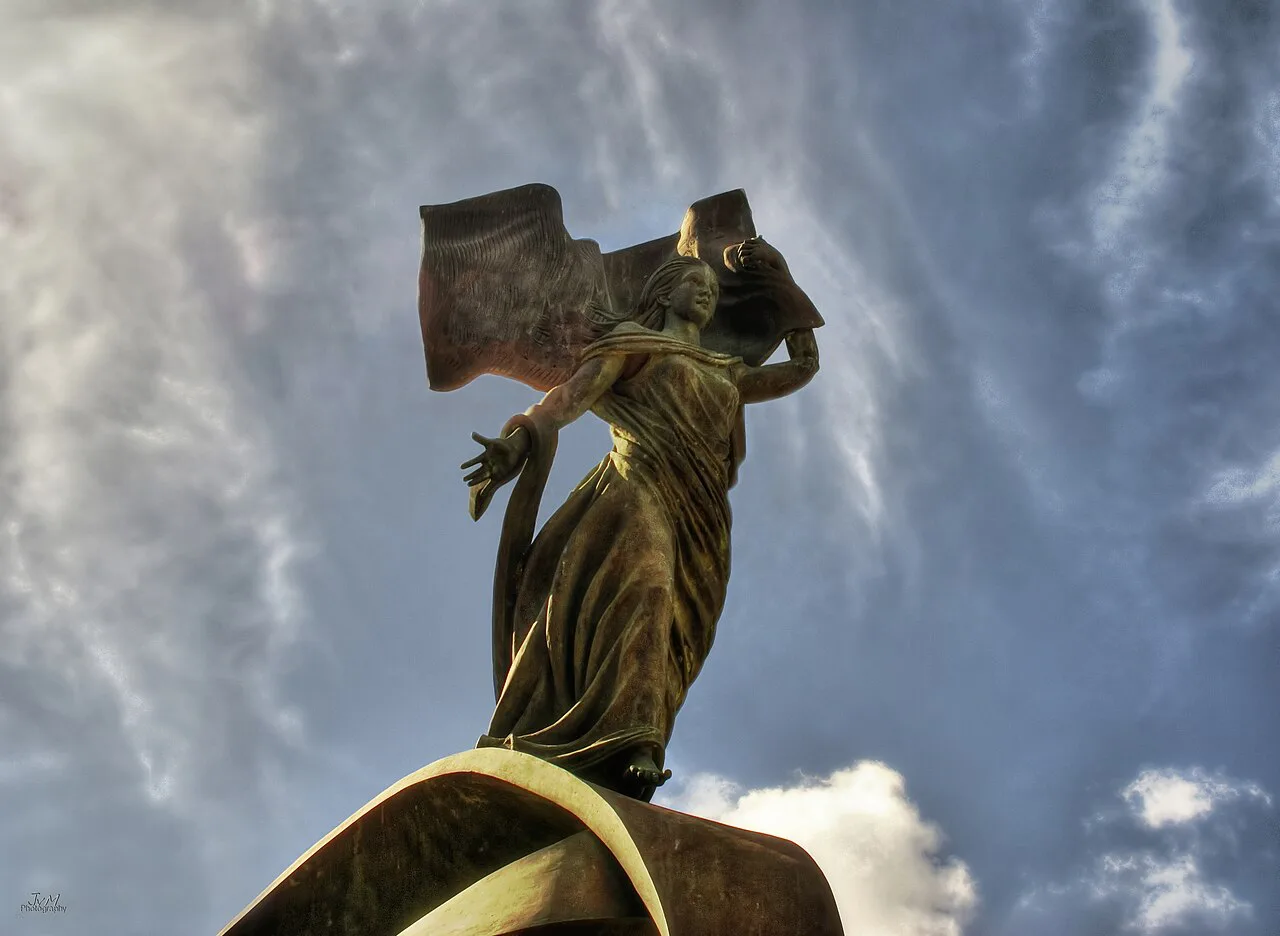
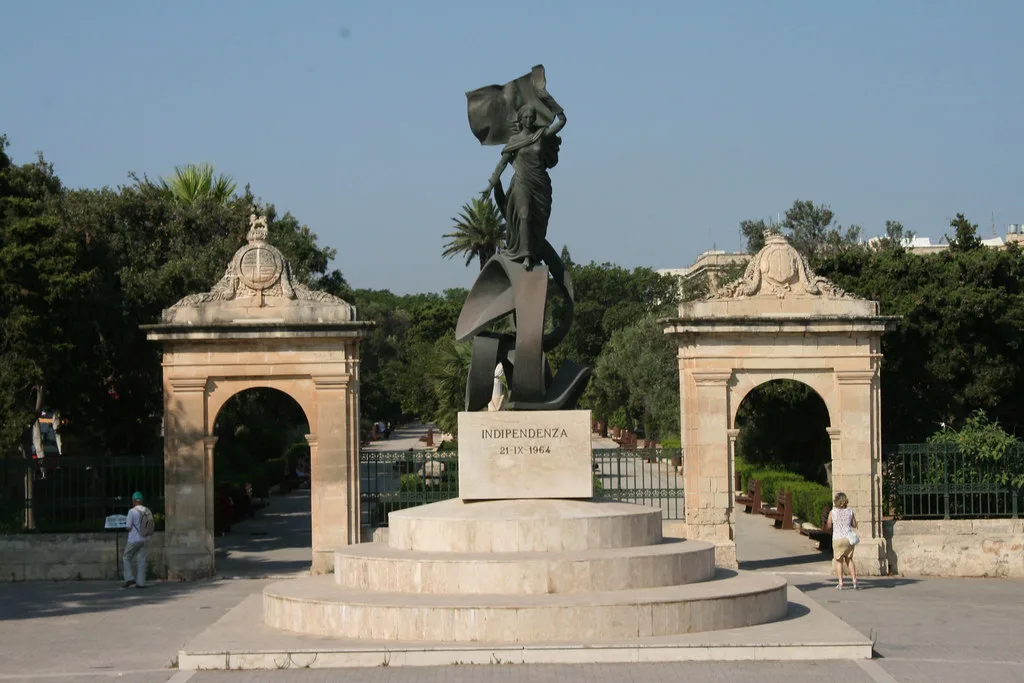
The day usually opens with a celebratory mass in Valletta, followed by a flower-laying ceremony at the Independence Monument in Floriana attended by the President, Prime Minister and other dignitaries. Crowds gather at the Granaries in Floriana, the wide square beside the monument, to commemorate what happened in 1964.
Later in the day there are cultural events and concerts, including orchestral performances, folk music and traditional għana, with streets dressed in red and white and fireworks or large concerts after dusk in and around Valletta and Floriana. Treat these as typical elements of the programme rather than a fixed schedule, and check the current programme before you build a day around a specific performance.
Official speeches, flag ceremonies, military parades and cultural events centre on Valletta, which is where the national commemoration is concentrated. If you want the ceremonies rather than the crowds, position yourself in Floriana early and walk into Valletta afterwards.
Where to see the era in Valletta and Floriana: the Lascaris War Rooms and the Independence Monument
Two places anchor the story for a visitor. The Lascaris War Rooms in Valletta are associated with the British wartime headquarters, and the Independence Monument in Floriana marks the settlement itself; both sit close enough to pair on foot between the two towns, though access to the war rooms should be checked before you go.
Churches carry much of the same period's memory, and Malta churches are where the ceremonial side of the national calendar plays out, including the mass that opens Independence Day. Modest dress with shoulders and knees covered is the usual expectation when you step inside.
If your trip spans more than the British period, the Knights of St John left the fortifications and auberges that frame both Valletta and the Three Cities, and their story fills in why the harbour looks as it does. Pair a Floriana morning with a walk through the grid of streets behind the bastions.
Visiting on 21 September: what to expect and how it affects a day in Valletta
Independence Day is a public holiday, so expect ceremony traffic around Floriana and central Valletta and build in slack rather than a tight schedule of stops. The morning belongs to the mass and the flower-laying, the afternoon to cultural events, and the evening to concerts, so a museum-heavy day works better on either side of the date.
Valletta is compact enough to cover on foot, and the Independence Monument in Floriana sits just outside the city gate end, which makes the two an easy pairing on a normal day as well. Carry water and plan the shaded side of the street for the middle of the day, when the limestone throws the heat back at you.
If your interest runs to the island's older layers, Malta facts covers the points most often asked about, while the Ħal Saflieni Hypogeum and the temple sites belong to Malta's prehistory rather than the British period. Keep the British era as one chapter rather than the whole story.
Should you plan a Valletta day around 21 September?
Yes, if the ceremony and the national mood are part of what you came for: the mass in Valletta, the flower-laying at the Independence Monument and the crowds at the Granaries in Floriana give the date a shape you cannot get on an ordinary day. If you want quiet museum time instead, pick another day and see the Lascaris War Rooms and the monument without the programme around them.
Explore more Malta guides
Frequently Asked Questions
Is Malta still part of the Commonwealth?
Yes. The Malta Independence Act established Malta as a sovereign nation within the Commonwealth of Nations, and that membership remains part of the island's international identity alongside European Union membership.
What was Malta called before independence?
Malta was a British colony, with full British sovereignty secured in 1814 after Britain was invited in to expel the French in 1800. English was made one of its two national languages alongside Maltese in 1936.
How did Malta move from colony to independent state?
After the 1956 integration referendum was treated as inconclusive, the political impetus shifted to full sovereignty, and negotiations with London produced independence in 1964 with British military bases retained until the presence ended completely in 1979.
Sources
Notes for your Malta trip
Optional updates when we add or correct a Malta or Gozo guide.
You might also like
Continue reading
More guides you'll find useful