Caravaggio in Malta: The Two Paintings in St John's Co-Cathedral
Caravaggio painted two works in Malta in 1607–1608, both in St John's Co-Cathedral in Valletta. Here is what to see, where they hang and how to plan.
On this page
Caravaggio left two paintings in Malta, and both are in St John's Co-Cathedral in Valletta. The Beheading of St John the Baptist, painted in 1608, was made for the Oratory; Saint Jerome Writing hangs elsewhere in the church. This guide covers what each painting shows, why one carries a signature in blood, how the 1607–1608 stay with the Knights Hospitaller produced them, and how to see both in a single visit without rushing the rest of Valletta.
The two works date from a brief period when the painter, Michelangelo Merisi, was living under the protection of the Order after fleeing Rome. The evidence for the stay is documentary rather than legendary, and the paintings themselves are the main reason most visitors add the co-cathedral to a Valletta day.
Caravaggio in Malta: the short answer
Two Caravaggio paintings are in Malta, and you see both inside St John's Co-Cathedral in Valletta. One is a large altarpiece painted for the Oratory, the other a canvas in the church proper. If you are in Malta for a week and care about painting, this is the single stop that justifies itself; if you have an afternoon in Valletta, plan the co-cathedral around them rather than the other way round.
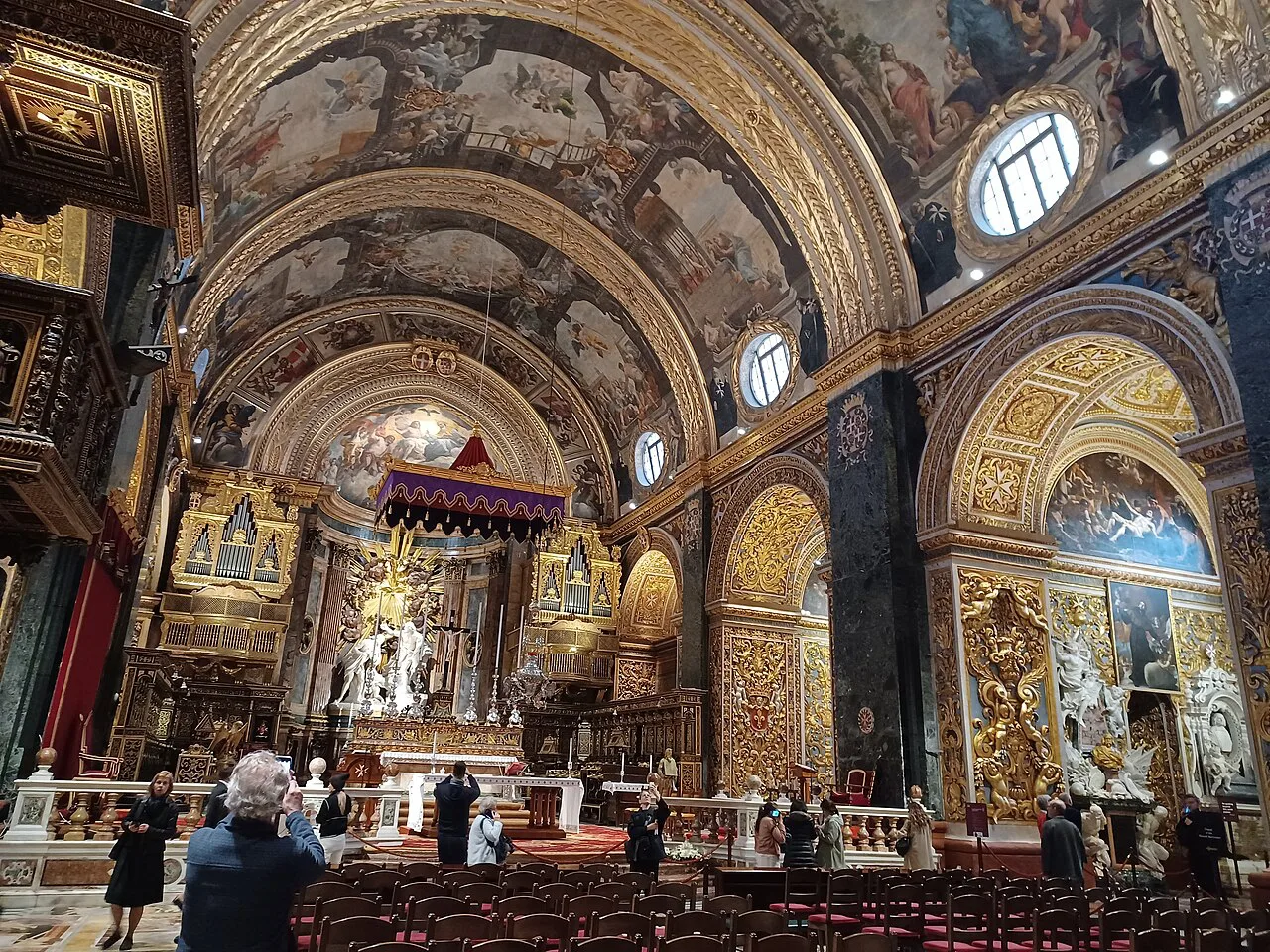
The co-cathedral sits inside the walled city, a short walk from the main gate and the bus terminus. The building is a working church as well as a visitor attraction, so the art is seen under church rules rather than museum ones: quiet, covered shoulders, no flash. Budget the paintings as the core of the visit and the Baroque interior as the setting.
How many Caravaggio paintings are in Malta, and where they hang
The two works are The Beheading of St John the Baptist, painted in 1608 and kept in the Oratory of the co-cathedral, and Saint Jerome Writing, which also hangs inside St John's Co-Cathedral in Valletta. Both were painted during the painter's stay in Malta in 1607–1608. Treating them as one stop is the common mistake: they sit in different spaces with different lighting and different crowds around them.
The Beheading is the larger and the more famous of the pair, and it is the one most visitors come for. Saint Jerome Writing is quieter and rewards a slower look once the group in front of the altarpiece has moved on. Knowing which is where before you enter saves you from doing the Oratory twice.
The Beheading of St John the Baptist: the only signed Caravaggio
The Beheading of St John the Baptist is the only known work Caravaggio signed, and he signed it in the blood flowing from the saint's neck, written as the letters f. Michelang[e]lo. The f stands for Fra', the title he held as a Knight of Magisterial Obedience after his admission to the Order on 14 July 1608. The signature is easy to miss at first glance, so look at the ground beneath the figure rather than at the faces.
The scene shows the moment of execution rather than the aftermath: the Baptist lies on the ground while a figure holds him by the hair, and a woman stands by with a platter. The composition is restrained, with shadows dominating the scene, which is why it reads as silence rather than spectacle. Give it a slow, unhurried look if the room allows.
Saint Jerome Writing: the second painting in the co-cathedral
Saint Jerome Writing shows the Church Father alone in a sparse interior, absorbed in his work. The subject is the translator of the Vulgate, the Latin Bible that became the standard text of the Catholic Church. The painting is a study in concentration rather than drama, and it sits well after the violence of the Oratory.
Seen together, the two works make an argument: one shows a scholar writing, the other a prophet dying, and both are painted with the same stripping away of decorative detail. That pairing is the reason to see them on the same visit rather than on separate days. If you only have time for one, the Oratory wins on scale and on the signature.
Why Caravaggio came to Malta and who he painted for
Caravaggio arrived in Malta in 1607 as a man on the run, having fled Rome after killing Ranuccio Tomassoni in a brawl on 28 May 1606. He sought the protection of the Knights of St John, and the commissions for the co-cathedral came out of that arrangement. His admission as a Knight of Magisterial Obedience followed on 14 July 1608, the rank reflected in the Fra' of his signature. He stayed in Malta barely fifteen months.
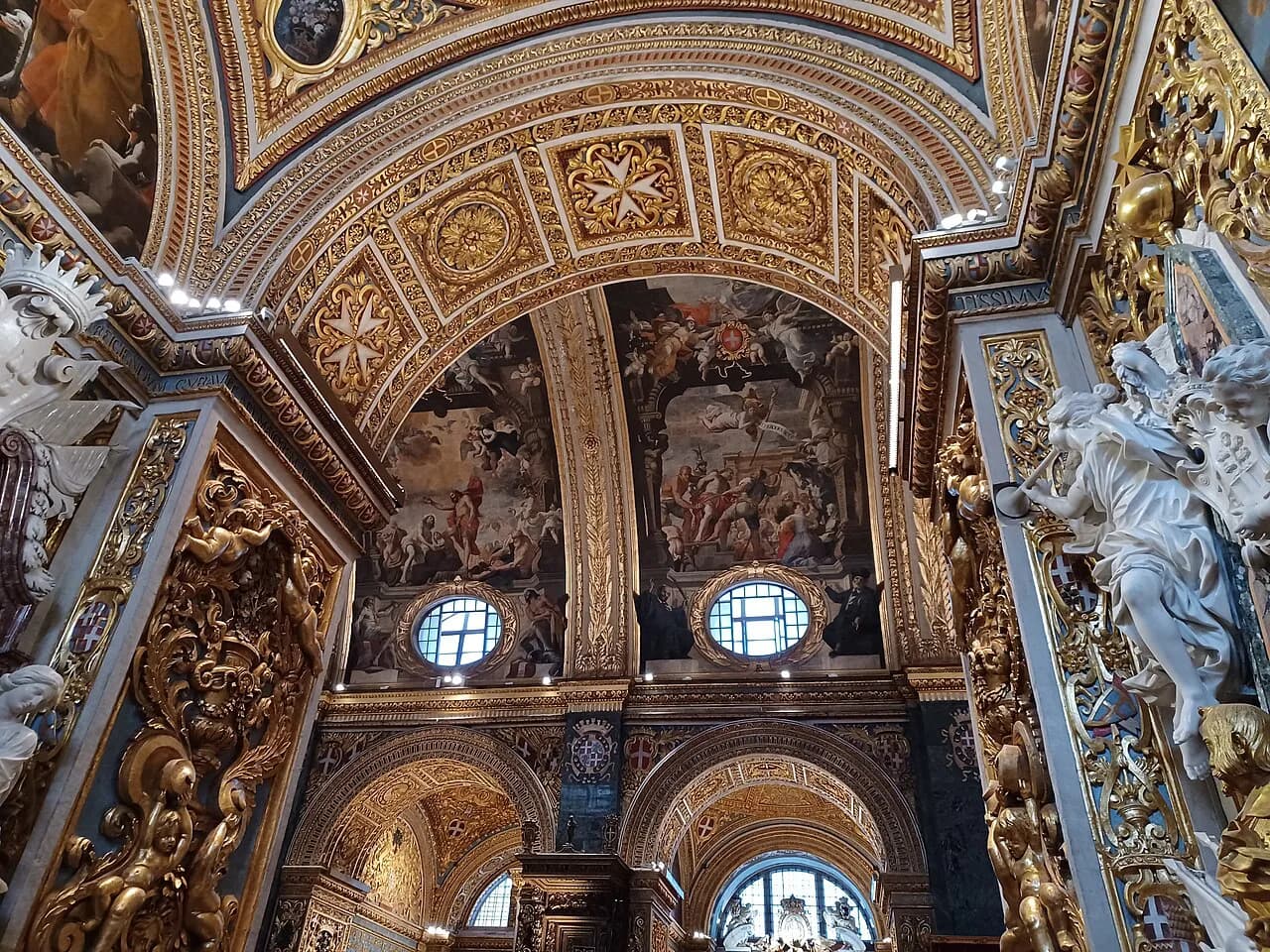
The Knights were the reason Malta had the money and the ambition to commission a painter of his standing, and the co-cathedral was their church. Reading a little about the Order before you go makes the setting legible: the langue chapels, the gilded vault, the sense of a military-religious institution presenting itself. For the wider story of the Order in Malta, the history pages are a better use of twenty minutes than another audio guide.
The Oratory versus the nave: where each painting sits
The Beheading hangs in the Oratory of St John's Co-Cathedral, a separate room reached from the church, and Saint Jerome Writing hangs inside the church itself. That split matters for planning: the Oratory has its own flow of visitors and its own atmosphere, so check how the two spaces are managed on the day.
The Beheading was painted specifically for the Oratory, which is why its scale and lighting suit the room rather than a gallery wall. Seeing it in place is part of the point. The nave painting is more easily overlooked by visitors heading straight for the Oratory, so make a deliberate stop on the way out.
Seeing both paintings in one visit: what to allow and how to order the stop
Allow plenty of time inside the co-cathedral if you want both paintings plus the interior, and longer if you read the labels and sit with the Beheading. Do the Oratory first while you are fresh, then the nave painting on the way back through the church. That order follows the emotional arc the two works make together.
Avoid arriving in the middle of a cruise-ship surge; the Oratory is small and a crowd in front of the altarpiece changes the experience entirely. Early morning and the later part of the afternoon are usually calmer than midday. If you are combining the co-cathedral with the rest of Valletta, put it first and leave the Upper Barrakka and the streets for afterwards.
Tickets, opening hours and booking ahead
The co-cathedral manages its own admission arrangements, including whether tickets are sold at the door or online and what the ticket covers. Check those details on the cathedral's own site before you commit a day to it, because the Oratory and the church are managed as one visit and entry terms can change. Guided options sold by third parties exist, but they add cost without giving you more time with the paintings.
If you want a structured introduction, the visitor route through the co-cathedral includes the interior and the Oratory rather than a separate art tour. Check admission and booking on the cathedral's own channels, and confirm the day's hours before you set out rather than building a tight schedule around a guessed opening time.
Dress code and church etiquette inside the co-cathedral
This is a consecrated church, so shoulders and knees covered is the safe rule for both men and women, and hats off for men. Flash photography is out, and phones should be silent. The rules apply in the Oratory too, even though it feels like a gallery.
Keep your voice low near anyone praying, and do not stand in the centre aisle to photograph the nave during a service. If a Mass is starting, wait or come back rather than walking through. Those same courtesies apply across the island's churches, and they are the reason the interiors stay visitable at all.
Reading the paintings before you go
Ten minutes of reading before you go is worth more than an hour of audio guide on site. Know that the Beheading is signed in blood, that the signature includes Fra', and that the scene shows the execution rather than the banquet. Know that Saint Jerome translated the Bible into Latin. With a few facts in mind you can look rather than decode.
In the 17th and 18th centuries Maltese churches were largely decorated by Italian artists or by locals trained in Italy, which helps explain why a Lombard painter fitted the Knights' programme. Looking at the co-cathedral as an Italianate interior rather than a Maltese one sharpens what Caravaggio was doing there.
Practical: reaching the co-cathedral in Valletta and coping with cruise-day crowds
St John's Co-Cathedral is inside the city walls, a short walk from Valletta's main gate and the bus terminus, so you do not need a car. Come on foot from the Triton Fountain side and you will pass the Auberge de Castille and the grid of streets the Knights laid out. The walk itself is part of the visit.
Cruise arrivals concentrate crowds in the late morning, and the co-cathedral is on most shore itineraries. If your day is flexible, start at opening time and be out before the coaches unload. The same logic applies to the rest of the walled city, where the streets narrow quickly.
Is the co-cathedral worth it for two paintings?
Yes, if you care about painting, and the two works justify the entry on their own. The Beheading is the reason to go; Saint Jerome Writing is the reward for slowing down afterwards. Plan enough time, go early, dress for a church, and check the co-cathedral's current hours and ticket details before you set out.
If your interests lie elsewhere in Malta's story, the island's fortifications and the Great Siege give you the same period from a military angle, and the co-cathedral will still be there on a later trip. For anyone building a Valletta day around art, though, this is the stop to protect.
Explore more Malta guides
Frequently Asked Questions
Did Caravaggio paint anything else in Malta?
The two works in St John's Co-Cathedral, The Beheading of St John the Baptist and Saint Jerome Writing, are the Caravaggio paintings in Malta. Both date from his stay of 1607–1608 under the Knights of St John.
Can you see the Caravaggio paintings without entering the co-cathedral?
No. Both hang inside St John's Co-Cathedral in Valletta, one in the Oratory and one in the church itself, so you see them as part of the co-cathedral visit.
Sources
Notes for your Malta trip
Optional updates when we add or correct a Malta or Gozo guide.
You might also like
Continue reading
More guides you'll find useful