Malta Religion: Catholicism, St Paul and Its Churches
Malta religion explained for visitors: why most Maltese are Catholic, the St Paul shipwreck tradition, and the churches, grottoes and catacombs you can see.
On this page
Malta is a Roman Catholic country: over 90% of the population is Catholic, the Constitution recognises Catholicism as the state religion, and churches anchor almost every town and village. For a visitor this is not background detail but landscape — domes on the skyline, festa banners in the streets, and catacombs and grottoes tied to the St Paul tradition. This guide covers the short answer on Maltese religion, where it shows up in the places you will actually visit, and how to behave inside a church.
What religion is Malta? The short answer for visitors
Roman Catholicism is the main religion, and the Constitution of Malta establishes it as the state religion while guaranteeing freedom of religion as a constitutional right. In practice the island remains a devout place where large numbers of Maltese attend church celebrations regularly, and religion still surfaces in public debate on matters of morality. Expect that presence in daily life as much as in the buildings.
Minority faiths exist and are growing as further ethnic groups settle on the islands, though the Muslim community is limited to a few thousand people, mostly from North Africa and the Middle East. Malta has one mosque, in Paola. If you are travelling for Friday prayers or simply curious, treat Paola as the address rather than assuming a choice of venues.
Constitution, parish life and school religion
Article 2 of the 1974 Constitution, still in force, states that the religion of Malta is the Roman Catholic Apostolic Religion, and the authorities of the state are obliged to protect it. That legal footing explains why Catholic institutions still shape schooling, public holidays and the rhythm of village life.
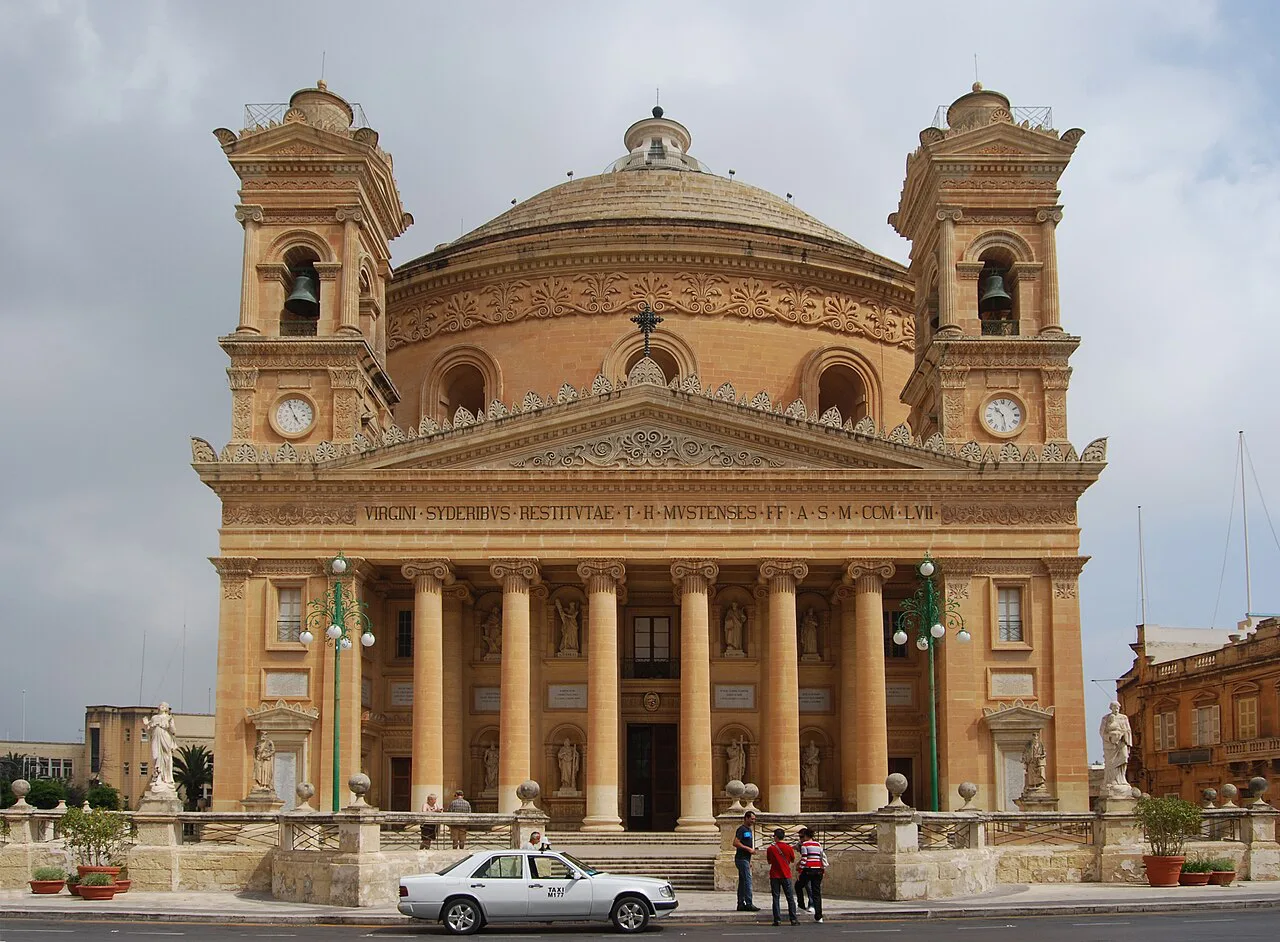
Each town has its parish church as the focal point and a source of civic pride, which is the single most useful fact for a visitor planning a route. Rather than chase one famous dome, wander into the parish church of whichever village you are in and use it as a marker of the centre. Children are also taught religion at school and prepared for Holy Communion and Confirmation in evening classes, so church buildings are working community spaces rather than monuments.
The St Paul shipwreck tradition and Maltese Christianity
By tradition, Christianity reached Malta around 60 AD when St Paul was shipwrecked on the islands on his way to Rome, stayed for a time and preached to the inhabitants. Publius, then governor, is said to have converted and become Malta's first bishop. Treat this as the founding tradition of Maltese Christianity rather than a documented itinerary — no site can be pinned to a verse of it.
The tradition held: by the third century AD almost all the inhabitants of Malta were Christians, a claim that rests on tradition rather than direct evidence. Paul was later joined as a patron by St Publius and St Agatha. If you want the deeper chronology of the islands before and after this period, the Malta history pages give the sequence from prehistory through the Roman Empire.
Arab rule from 870 AD for over two hundred years brought the Muslim faith and conversions, before the Normans arrived and the Catholic Church was reinstated under the Kingdom of Sicily. That reversal is why the island's Catholic identity reads as reclaimed rather than uninterrupted. It also explains how completely the church reoccupied the landscape afterwards, with chapels built across the countryside.
Reading the landscape: domes, parish churches and what to look for inside
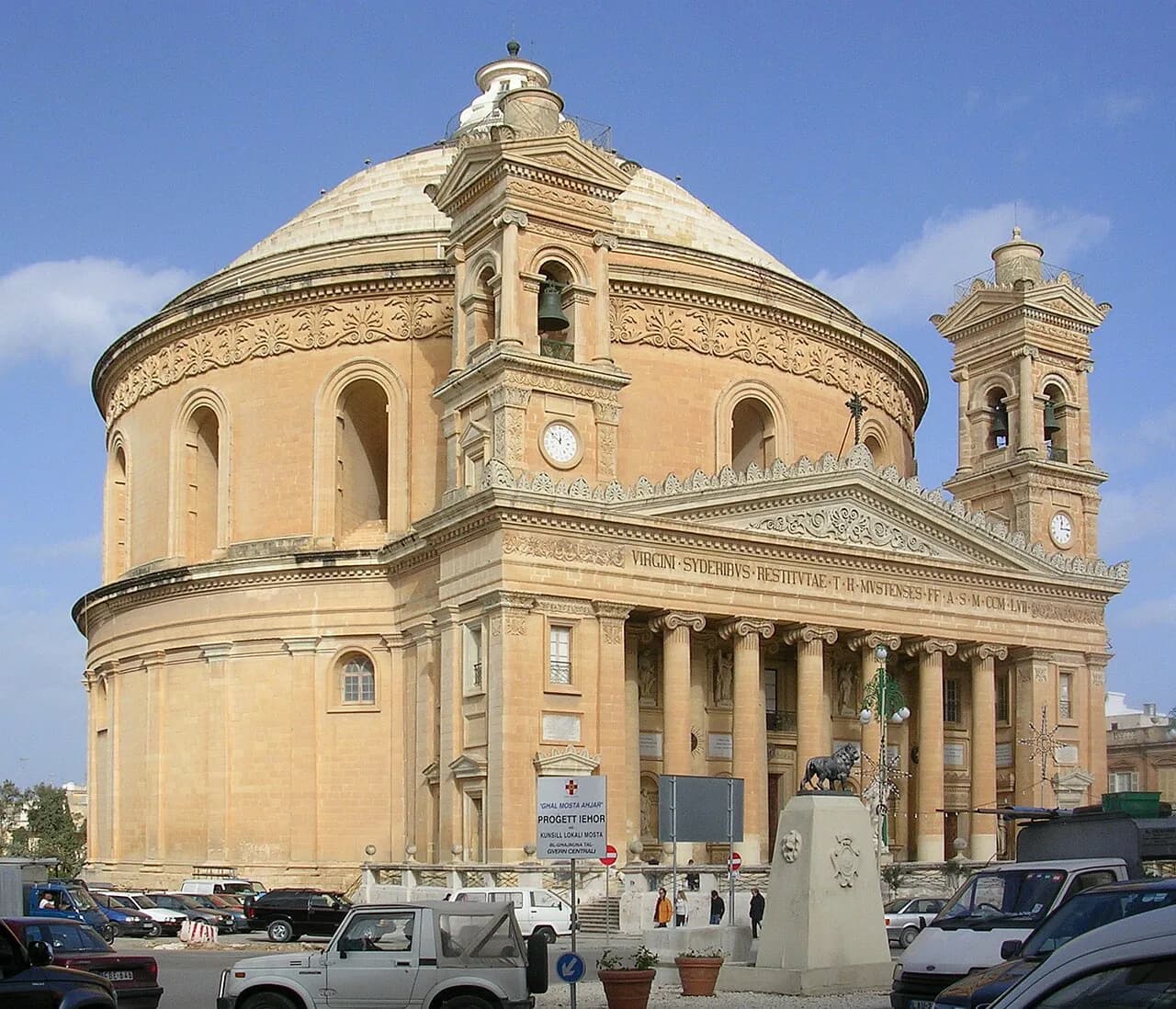
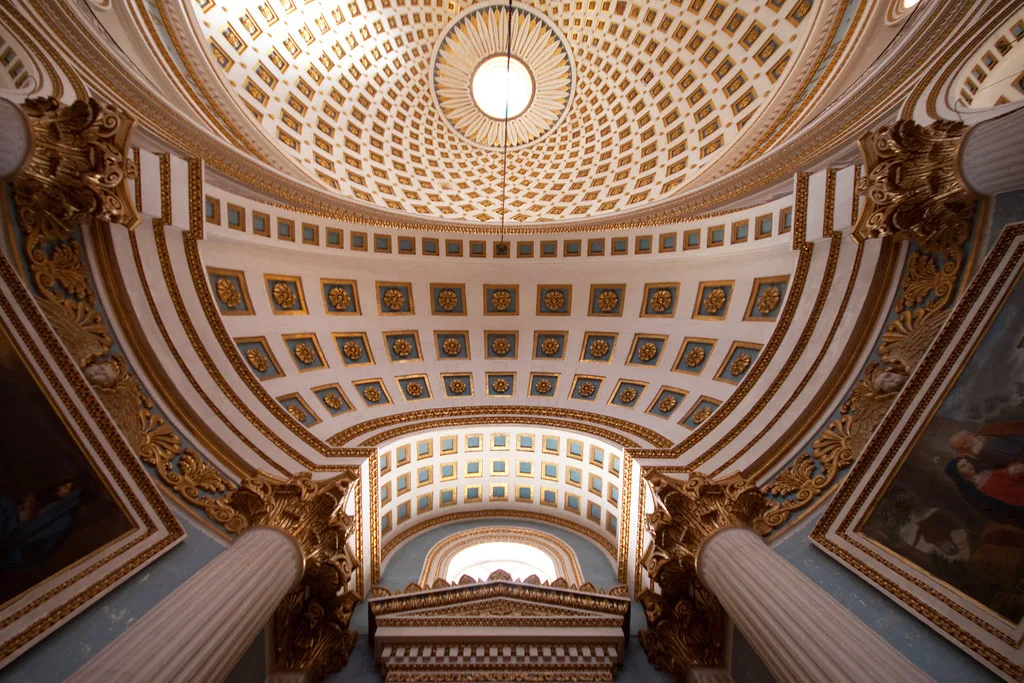
The Mosta Dome is the parish church most visitors know by name, and it is a good example of how a single village church can dominate a townscape. Churches here are treated as works of art in both architecture and interior decoration, with paintings, sculpture and gilded artefacts filling the nave. Look up and look sideways: the art is on the walls and in the side chapels, not only behind the altar.
Parish pride spills into festas, when a parish celebrates its patron saint with marching bands, processions and fireworks. Two widely celebrated feasts are the Assumption of Mary on 15 August and Our Lady of Victories on 8 September, both tied to dates in Maltese history. Check locally for the programme of any particular parish rather than assuming a fixed schedule.
Early Christian sites: the Rabat catacombs
The clearest physical trace of Malta's early Christian community is in the catacombs at Rabat, where the signs of that community can still be seen. They sit beside the larger story of Mdina and Rabat, which is worth pairing with the churches rather than treating as a separate outing. Go with an interest in underground space and low light; these are burial complexes, not display galleries.
The grotto tradition tied to St Paul sits in the same devotional world, and shrines of this kind are what make the islands a place of Catholic pilgrimage. If you are following that thread, plan Rabat and the shrines as one half-day and keep the churches of Valletta or Birgu for another.
Temple sites: Ġgantija, Tarxien and Ħaġar Qim are not churches
Malta's megalithic temples predate Christianity by millennia and belong to a different religious world entirely. From as early as 3000 BC, local farmers worshipped fertility figures and built temples such as Ħaġar Qim and Mnajdra in Malta and Ġgantija in Gozo, where they praised the goddess and sacrificed animals. Visiting them is an exercise in reading stone plans and chambers, not in seeing a church.
The Tarxien temple and the Hypogeum at Paola belong to the same ritual tradition, and the Hypogeum in particular needs booking well ahead because tickets go quickly. Keep the vocabulary straight in your own head: temples, not churches, and burial complex rather than crypt. For the chronology that connects them to the later Catholic centuries, the island's history material is the sensible starting point.
What this means for your visit: dress, quiet and Sunday services
Maltese churches are active parish buildings, so treat a visit as entering a working space rather than a museum. Dress modestly, keep voices low and stay out of the way during a service. No source sets a formal visitor code beyond that, so cover shoulders and knees as a safe default and follow any notice at the door.
Sunday is the obvious day to hear a service and the worst day to treat a church as a sightseeing stop. If your interest is architecture and art, go on a weekday; if it is the liturgy, join a congregation rather than photographing it. Either way, do not assume a church, grotto or catacomb is open daily or free — check at the door.
The Catholic story runs straight into the military one, and the Knights Hospitaller built and rebuilt many of the churches you will walk past. If that thread interests you, follow it through the Knights Hospitaller before you go and the buildings will make far more sense.
Where to take your church-and-catacomb day
Build your day around one parish church, the Rabat catacombs and a short stop at a site tied to St Paul, all within easy reach of Mdina. Keep the temple sites for a separate outing, because Ġgantija, Ħaġar Qim and Tarxien belong to a prehistoric ritual world and reward a different kind of attention. That split stops the island's religious story collapsing into a single blur of old stone.
Explore more Malta guides
Frequently Asked Questions
What was Malta called in the Bible?
The Bible does not name Malta explicitly in the St Paul shipwreck tradition as described here; the tradition places Paul's shipwreck on the islands around 60 AD, and the Maltese identify that episode with their own islands as the arrival of Christianity.
Do people in Malta speak English?
Yes. English is widely spoken alongside Maltese, which is why British and Irish visitors manage easily in churches, museums and restaurants. That does not mean Maltese is optional locally — it remains the everyday language of parish life.
Can I visit the mosque in Paola?
Malta has one mosque, in Paola, serving a Muslim community of a few thousand people. Visitors should contact the mosque directly about access rather than assuming a tourist opening.
Sources
Notes for your Malta trip
Optional updates when we add or correct a Malta or Gozo guide.
You might also like
Continue reading
More guides you'll find useful