Maltese Cross: What the Eight Points Mean and Where to See It in Malta
What the Maltese cross is, what its eight points and four arms stand for, why fire services use it, and how to recognise it on a trip to Malta and Gozo.
On this page
The Maltese cross is an eight-pointed cross formed from four V-shaped arms that join at their tips, and it carries two overlapping sets of meaning rather than one: the eight points stand for the eight Beatitudes and for the eight Langues of the Order, while the four arms stand for Prudence, Justice, Temperance and Fortitude. It is also called the Cross of St John, and the knights and nuns of the Order of St John of Jerusalem have used it as their distinctive symbol since the 12th century. This guide decodes the shape arm by arm and point by point, then explains why fire and emergency services far from Malta wear it and where travellers actually encounter it.
What the Maltese cross looks like
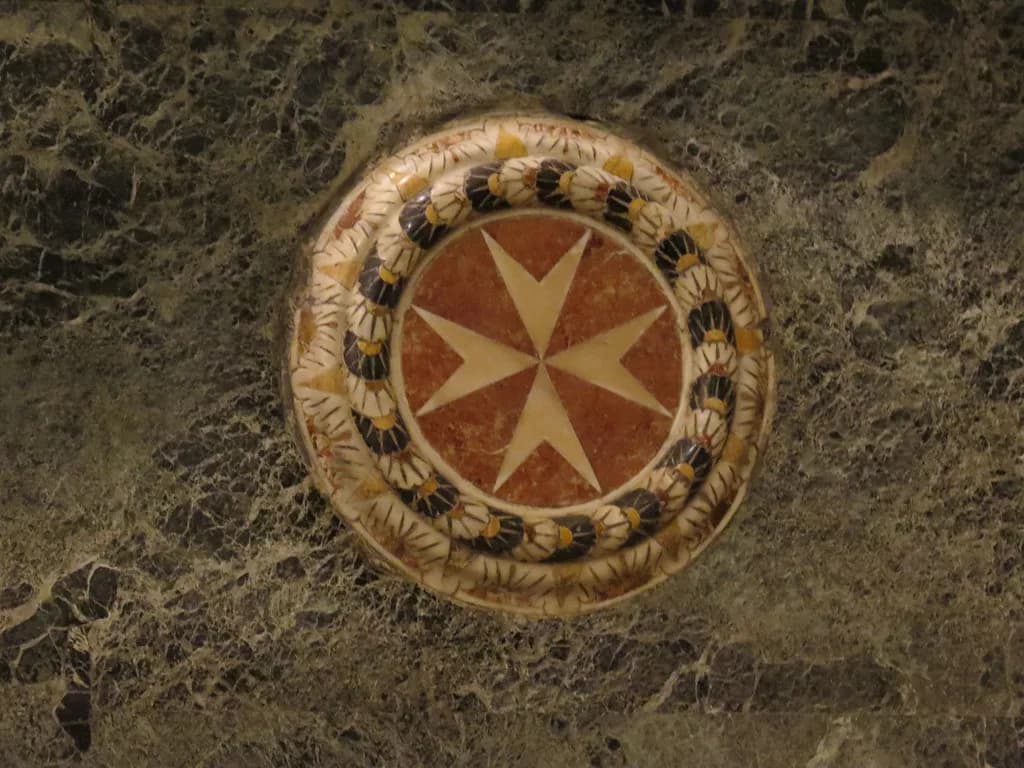
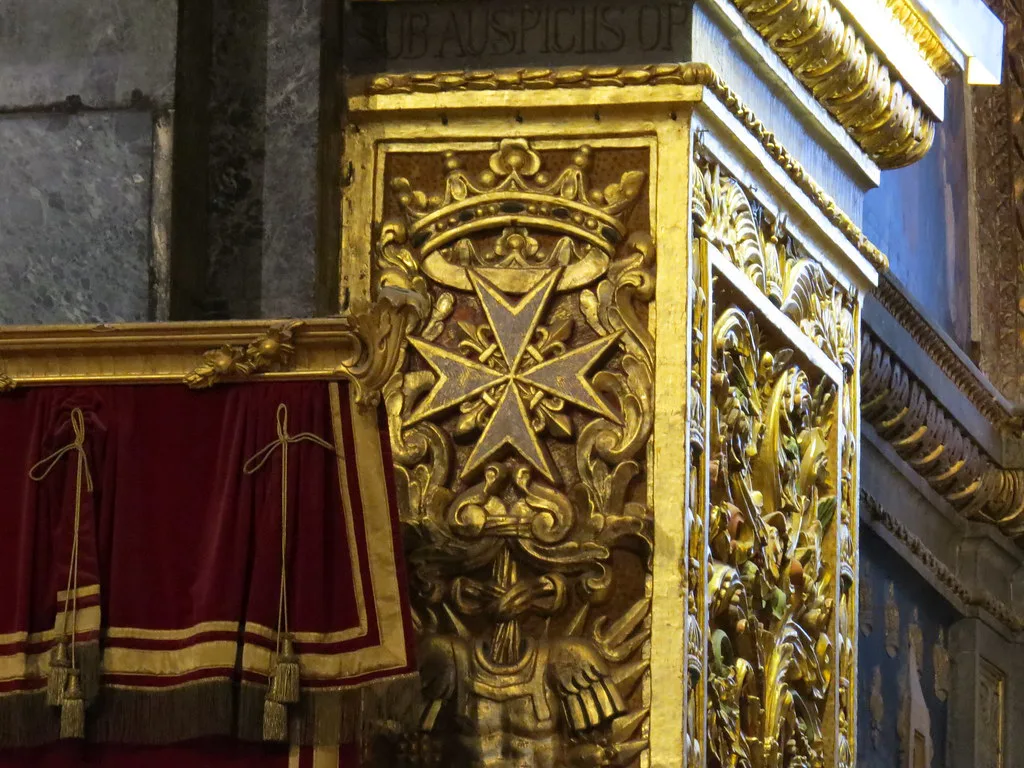
Four V-shaped arms meet at their tips, and each arm ends in a triangular point, which gives the cross its eight extremities and its instantly readable outline. Described plainly, it reads as four arrowheads pointing inward towards a centre rather than as a simple plus sign. That geometry is why the cross stays legible at small sizes on a badge or a pendant, and why a quick glance at the outline tells you whether you are looking at a Maltese cross rather than a plain Latin cross.
Why it is called the Maltese cross
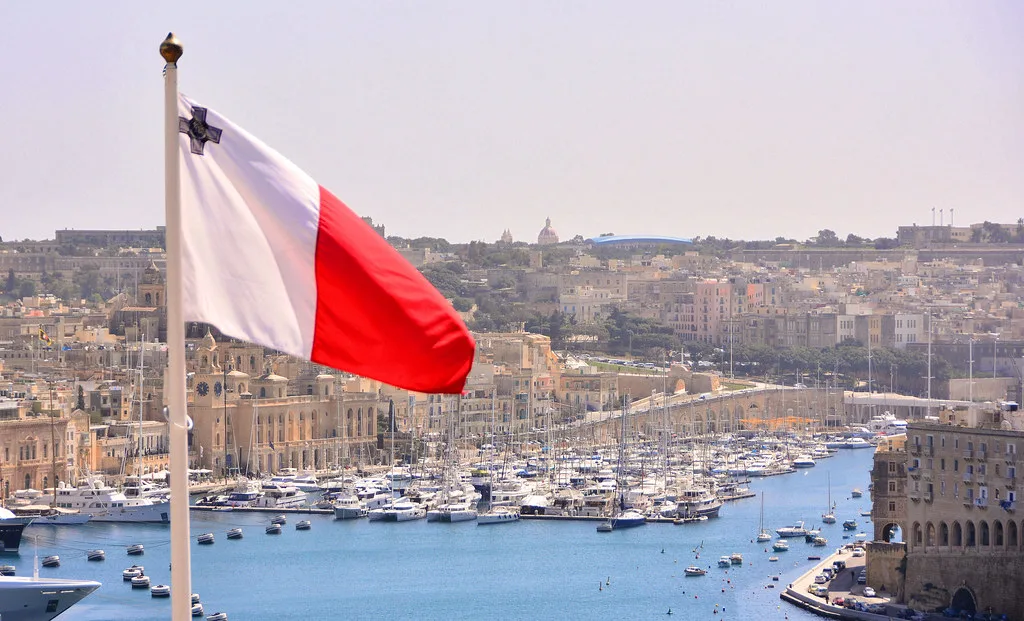
The emblem's older name is the Cross of St John, after the Order of St John of Jerusalem, whose knights and nuns adopted it from the 12th century. Malta entered the story later: the Order was granted the island in the 16th century, and between 1530 and 1798 Malta served as the residence of the Order of St John, the Knights Hospitaller. The Order's own tradition also traces the eight-pointed cross to the Maritime Republic of Amalfi, whose Merchants founded a hospice in Jerusalem in 1048, after which the cross became the emblem of the Knights Hospitaller. If you want the wider sequence of sieges, rulers and rebuilding that framed those centuries, the island's Malta history is the place to start.
What each of the eight points stands for
The eight points are read in two ways at once. First, they symbolise the eight Beatitudes of Matthew 5:3-12, which flow from the four virtues carried by the arms; the monastic tradition of the Order lists them as spiritual satisfaction, simplicity of life, humility, sorrow for faults, love of justice, mercy, cleanliness of heart and thought, and endurance of affliction for justice. Second, the same eight points stand for the eight Langues, the linguistic divisions of the Order.
The eight Langues were Provence, France, Auvergne, Italy, Aragon, Allemagne (Germany), England and Portugal, with Castile grouped alongside Portugal. Once you know the list, a Maltese cross becomes a record of the division of the Order into its eight linguistic groups rather than a single abstract badge. Modern explanations of the symbol likewise read the eight points as the regions from which the knights came, which is why the number eight recurs in almost every description of it.
The four arms and the four virtues
Each of the four V-shaped arms represents one of the Christian virtues: Prudence, Justice, Temperance and Fortitude. This is the layer most people miss, because the eight points get all the attention. Read a cross in front of you by counting the arms first and the points second: four arms for the virtues that shape a life, eight points for the Beatitudes that flow from them and for the Langues that organised the Order.
Why the cross is white
The cross of the Order is white, and the colour carries its own meaning: it signified the purity of life expected of those who dedicated themselves to defending the Christian faith and serving the poor and suffering. The nuns' tradition phrases the same idea as purity inside the heart and outside, without stain. This is why a cloth or enamel version you see on a building or a habit may be white even though the cross you buy as a souvenir is often red or silver; the colour belongs to the original device rather than to the shape.
Why fire and emergency services use it
In many countries, especially across Europe and North America, the Maltese cross is associated with fire departments and emergency services, where it symbolises courage, selflessness and dedication to protecting lives and property. The same shape appears on badges, medals and uniforms to stand for bravery, service and honour. If you have seen the cross on a fire engine or a helmet and wondered about the Malta connection, the emblem is now a general mark of service rather than a badge of place.
The cross as Malta's national symbol
The Maltese cross is also the national symbol of Malta and is described as embodying the island's identity, history and cultural heritage. That puts two readings side by side: the emblem as a religious and heraldic device of the Order of St John, and the emblem as a badge of the Maltese nation itself. Keep them apart when you are reading a monument or a label, because a cross carved for the Order and a cross printed for the state are making different claims even when the shape is identical.
The shape appears on badges, medals and uniforms, which is where most visitors meet it first: on a lapel pin, a uniform flash or a commemorative medal rather than on a wall plaque. The Order's humanitarian work, serving the sick, poor and vulnerable, is the other strand the symbol carries today. Malta religion covers the wider devotional landscape if you want to see how the emblem sits alongside the island's churches and feast days.
Buying a Maltese cross: filigree and silversmiths
The cross is most often bought in Malta as filigree jewellery, made by goldsmiths and silversmiths who work the wire into pendants, brooches and earrings. One Marsascala workshop, Saliba's Gold & Silversmith at 19, Triq il-Kavetti, lists weekday opening and asks visitors to phone ahead before travelling; confirm the published times directly before you make the trip. The same workshop's published terms note that displayed product prices are gross amounts including VAT and that billing is always in euro, with other currencies shown only as indicative conversions, so read the euro figure.
For a purchase you will wear, decide between a red enamel cross, which reads immediately as Maltese to other travellers, and a plain silver or gold piece, which is quieter and easier to wear daily. Ask the maker to identify which layer of meaning the design follows, since a piece built around the eight points looks different from one built around the four arms. If you are in Malta for its layers of history rather than its shops, the Great Siege of Malta is the episode that fixed the Order in the island's story.
Wearing a Maltese cross
Wearing one signals recognition of the symbol's twin identity: an Order device and a national emblem. It is worn today as a pendant, a brooch or a pin, and on uniforms and medals as a mark of service. For a visitor, the safest reading is that the cross is a widely used emblem rather than a private badge, so a small silver or enamel version is unremarkable everyday jewellery.
Should the Maltese cross shape your trip?
Yes, if you like reading symbols in the places you visit: once you can count four arms and eight points, crosses on façades, badges and shop windows stop being decoration and start carrying the virtues, the Beatitudes and the Langues. Skip the detour if you only want scenery, because the emblem lives in small details rather than in a single site. Build the rest of your itinerary around the island's fortifications and the Caravaggio in Malta, both of which belong to the same centuries in which the Order shaped the island.
Explore more Malta guides
Frequently Asked Questions
What is this symbol ✠?
It is an eight-pointed cross made of four V-shaped arms joined at their tips, known as the Maltese cross or the Cross of St John. The four arms stand for Prudence, Justice, Temperance and Fortitude, and the eight points for the Beatitudes and the eight Langues of the Order.
Is it okay to wear a Maltese cross?
It is widely worn as jewellery, most commonly as filigree pendants and brooches sold by Maltese silversmiths, and it also appears on uniforms and medals as a mark of service. If the question for you is religious rather than practical, ask your own faith leader rather than relying on a travel guide.
Sources
Notes for your Malta trip
Optional updates when we add or correct a Malta or Gozo guide.
You might also like
Continue reading
More guides you'll find useful