Where to Watch the Sunset in Malta and Gozo
Plan a Malta sunset: which west-facing coasts and bastions catch the setting sun, how daylight shrinks through autumn, and how to sort the journey home.
On this page
Pick your sunset spot by direction, not by reputation: in Malta the sun goes down over the west and south-west, so the open west coast and the seaward bastions work and the east-facing harbours do not. This guide sets out which coasts and viewpoints face the setting sun, how published calendars show daylight shortening through autumn, and how to arrange the return leg before darkness.
Times move quickly at this latitude, so treat any figure here as a dated example from a published calendar rather than a promise for your evening. A Malta sunrise and sunset calendar lets you check the exact minute and direction for your own date, and that check is worth doing before you commit to a far-flung viewpoint.
Where the sun sets in Malta: west and south-west over the sea
The setting sun sits to the west-south-west for much of the autumn, which is why the island's western flank gets the light and the Grand Harbour side goes into shade first. A published Valletta calendar puts sunset at 17:12 in the WSW on 26 October 2026, with sunrise at 06:18 and a day of 10 hours 54 minutes. Use that direction as your filter: a viewpoint facing west or south-west across open water has a clear line to the sun, while one facing east looks at shadow.
The same calendar shows Malta's sunset times barely differ between towns on a given evening, because the islands are small; Birkirkara and Żabbar both recorded 17:12 that day. What changes is your horizon. A hilltop or a sea wall gives you an unobstructed western view, whereas a street in a dense town gives you rooftops and a much earlier loss of direct light.
How Malta sunset time changes through the year
Daylight length swings widely through the year. In a Valletta calendar for 2026, day length runs from 11 hours 48 minutes on 1 October down to 10 hours 45 minutes on 30 October, with the switch to winter time on 25 October bringing sunset forward an hour.
St Julian's figures tell the same story from the north harbour side: 1 January 2026 gives sunrise at 07:13 and sunset at 16:58, a day of 9 hours 45 minutes, while 18 March brings sunrise to 06:11 and sunset to 18:11. Read the trend rather than memorising any one date, because the useful planning fact is how much walking light you have left after the sun goes down.
For a live figure on the day, an astronomy page for Valletta reports sunrise, sunset and hours of daylight, which is the quickest way to confirm the minute before you set out. Check it against your own plan rather than relying on a number printed in a guide, since the date on any table matters.
Watching from Valletta's bastions and the Grand Harbour side
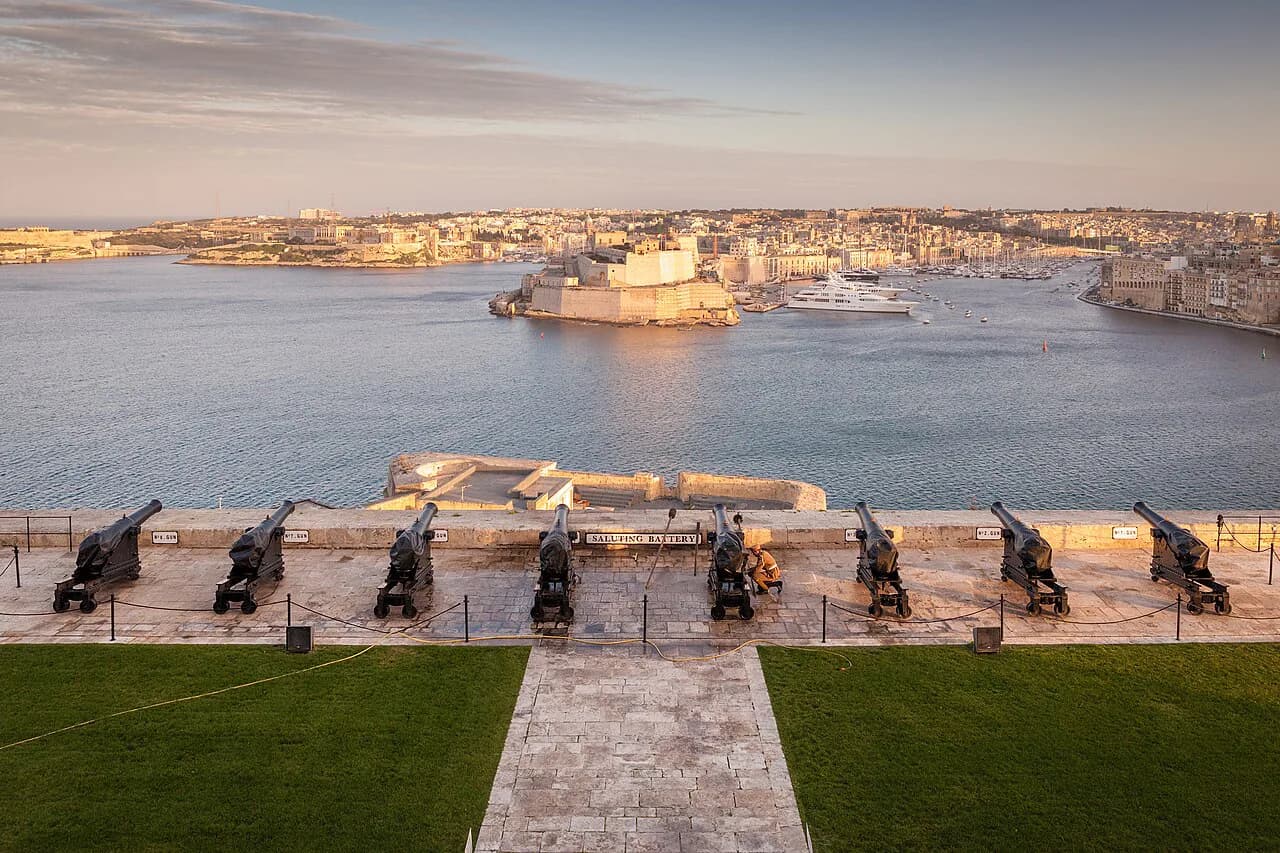
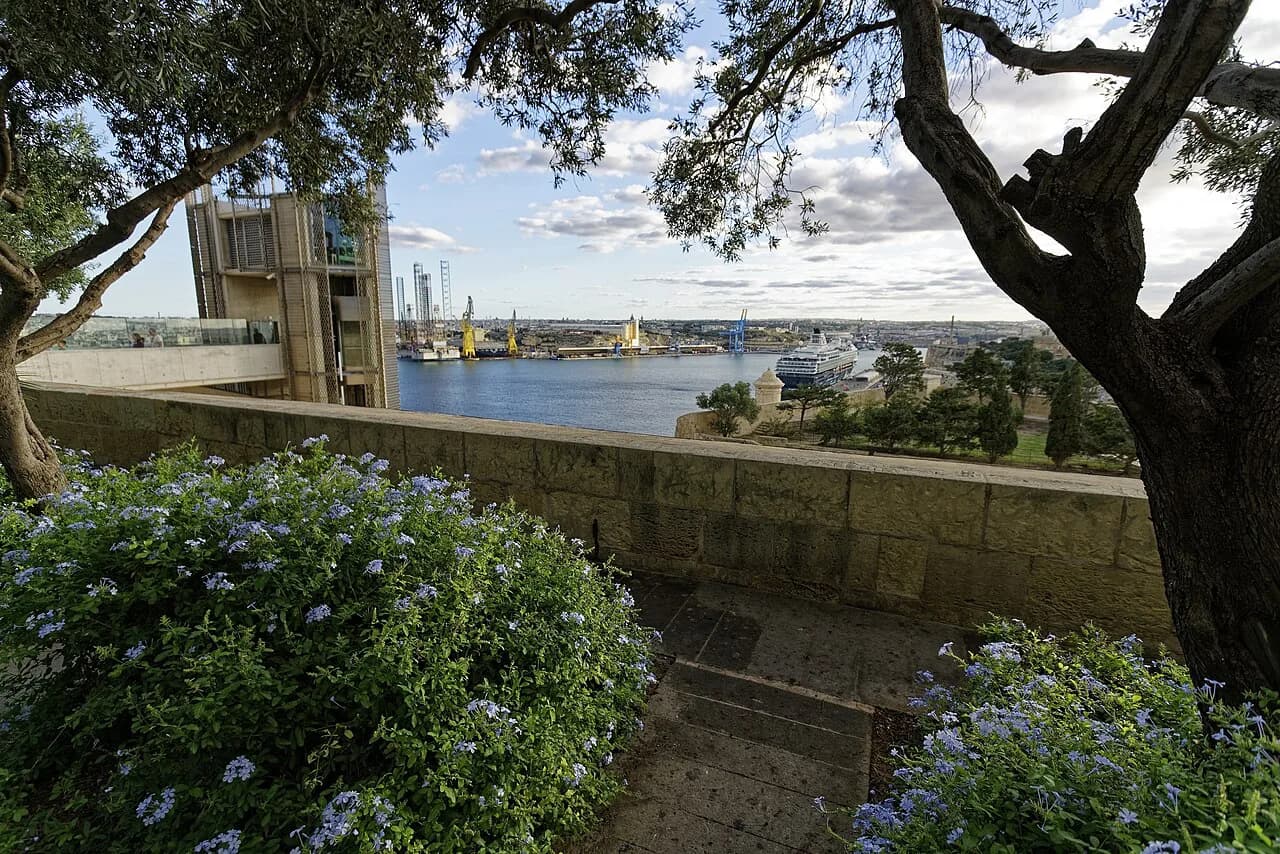
Valletta's seaward bastions give you height and a wide view without leaving the city, and the walk back into the grid of streets is short once the light fades. The trade-off is that the harbour side faces east, so the sun drops behind the city rather than into the water; for the full over-the-sea view, position yourself on the western ramparts or cross to the Three Cities for a look back at the skyline.
Pair the evening with the day's sightseeing so you are not making a special trip: St John's Co-Cathedral and the state rooms fill an afternoon, and the bastions are a few minutes' walk from the centre. Time your exit so you are on the ramparts before the light goes, rather than still inside a museum when the sky turns. See Things to Do in Malta for more ways to fill the day.
If you want the harbour from the water instead of the wall, a boat trip timed to the late afternoon puts you below the fortifications as the light drops. Check departure and return times with the operator on the day, since harbour trips depend on the season and the weather.
The west coast: Blue Grotto and Wied Iż-Żurrieq
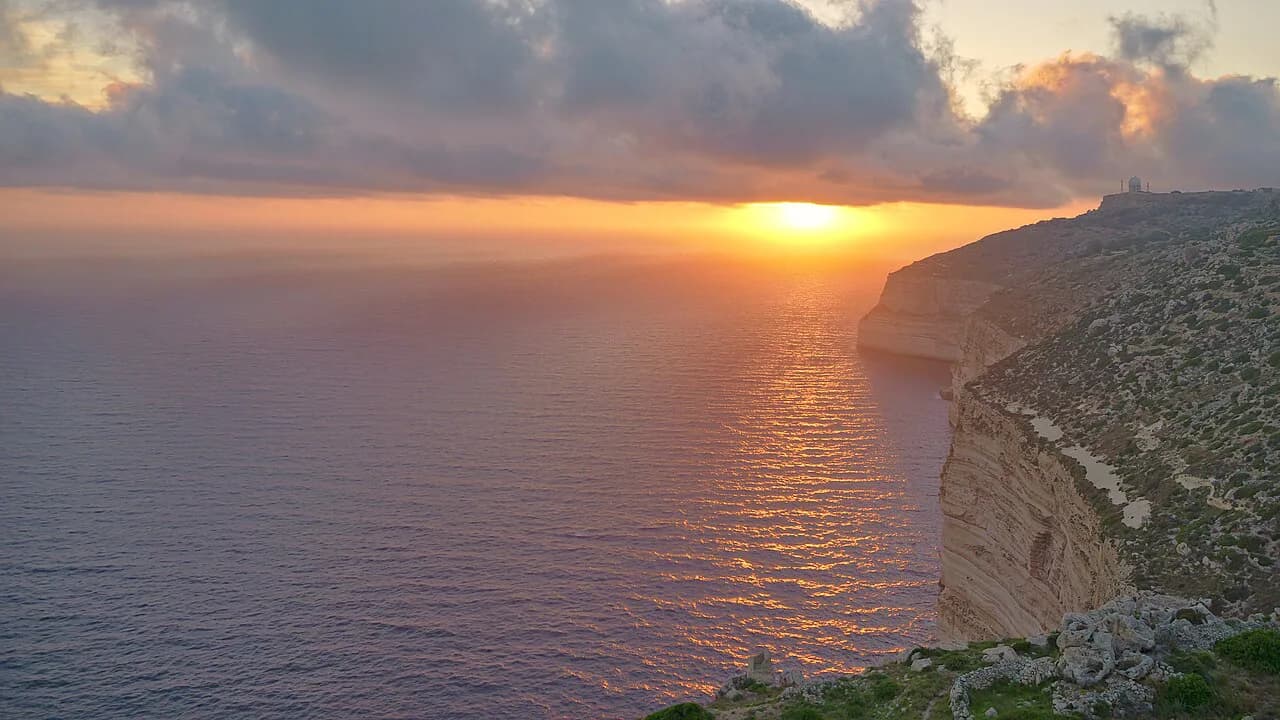
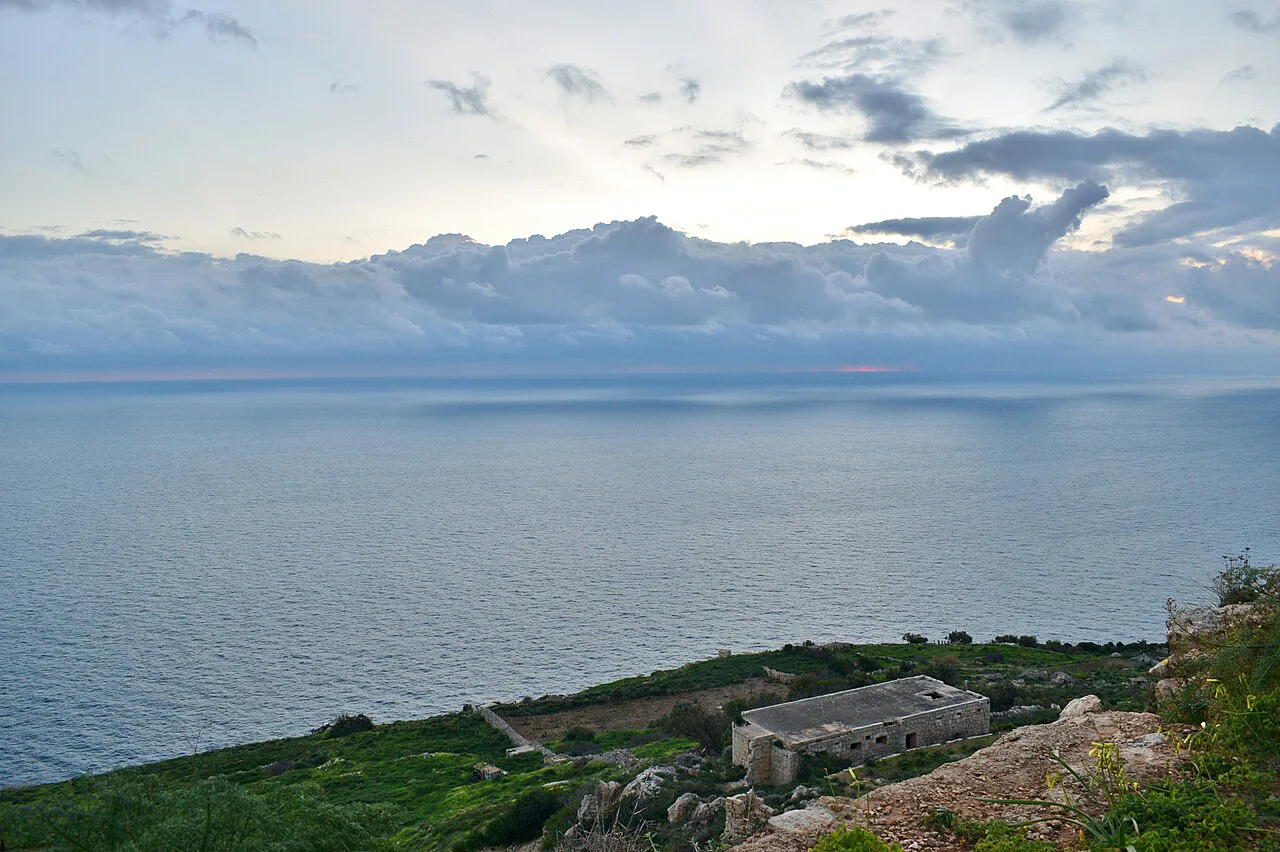
The stretch around Wied Iż-Żurrieq and the Blue Grotto faces the open sea to the south-west, so it catches the setting sun and the cliffs and caves darken against the light. A published note on sunset photography in Malta names the Blue Grotto area, also called Wied Iż-Żurrieq, as a place with several spots to sit and watch the evening. Arrive early enough to walk to a viewpoint before the light goes, because the coast road and steps take longer than they look.
The Blue Grotto caves on this coast are a daytime visit, and the boats that run into them work to their own schedule, so do not assume you can combine an evening cave trip with the sunset. Make the caves a separate outing and keep the evening for the clifftop.
This is the south of the island, so plan the whole day around it rather than tacking the coast onto a Valletta afternoon. The southern villages and harbours, including Marsaxlokk and Birżebbuġa, sit within reach for a combined loop before you settle at a viewpoint.
Sliema and St Julian's: sunset over the water from the promenade side
Sliema and St Julian's face north-east across the water towards Valletta, so the sun sets behind the town rather than over the sea in front of you; what you get is a sky above the city skyline as the light goes. On 25 October 2026, a St Julian's table gives sunrise at 06:18 and sunset at 17:16, with the following day at 17:14. For a sea horizon, walk south along the coast or take the short crossing to Valletta and use its western ramparts.
The promenade side suits anyone staying in Sliema or St Julian's who wants an easy evening with no transport at the end of it. Treat it as a convenience pick rather than a horizon pick: you are watching the sky and the city lights come on, not the sun dropping into open water.
Comino and Gozo: picking a west-facing spot before the last ferry back
Gozo and Comino are the places where the return leg controls the plan. A west-facing spot on Gozo looks straight into the setting sun, and the ferry crossing back to Malta runs to its own schedule, so confirm the last sailing with the operator before you commit to a late viewpoint. The Malta islands are close together, but a missed ferry turns a pleasant evening into a long one.
Għajnsielem, near the ferry terminal at Mġarr, is the practical base if you want a short run to the boat after the light fades. From there you can drive or ride to a western viewpoint and be back at the terminal without crossing the island in the dark.
On Comino there is little between you and the water, so the sunset is open, but you are dependent on whatever boat brought you. Sort the return before you go ashore, and check conditions with the operator on the day.
Getting there and back: bus, car or boat, and why you should not leave the return leg to chance
The real constraint is not the sunset minute but the window between sunset and full darkness. On 26 October 2026 in Valletta, sunset at 17:12 is followed by civil twilight ending at 17:39, so you have roughly half an hour of usable light for the walk back to a bus stop or car. That is barely enough for a cliff path or a long flight of steps, so leave the viewpoint early rather than waiting for the last colour.
Buses thin out in the evening and the routes are not designed around sunset crowds, so check the last services before you go and keep a taxi number as a fallback. If you are driving, park facing out and avoid anywhere that needs a narrow lane in the dark.
A boat trip removes the parking problem but adds a departure time you cannot ignore. Book nothing that returns after dark unless the operator confirms it, and keep the evening meal near the terminal rather than at the far end of the island.
Practical constraints: heat, haze and the short window after sunset
Heat lingers into the evening in autumn, and the walk to a clifftop is often uphill on rough stone, so carry water and wear shoes with grip. Haze can soften the sun before it reaches the horizon, which makes a clear view more important than a perfect minute.
If you want sunset as part of a wider day in the north, the villages around Mellieħa give you sightseeing to fill the afternoon before a western viewpoint. Build the day this way so the sunset is a finish rather than a separate journey.
Wherever you end up, decide in advance how you get back and leave a margin. For the wider spread of places worth a day out, see Best Places to Visit in Malta, Grouped by Area, and use the direction rule to pick which coast fits your evening.
Which coast fits your evening
Choose the west or south-west for an open horizon over the water, and choose Valletta's western ramparts if you want height and a short walk back into town. Sliema and St Julian's work for an easy evening near your base, but expect the sun to set behind the town rather than into the sea.
Before you go, check the sunset time and direction on a published Malta calendar, then fix your return leg around civil twilight rather than the sunset minute. That one habit turns a rushed scramble in the dark into a calm end to the day.
Explore more Malta guides
Frequently Asked Questions
What is 30 minutes after sunset in Malta?
It is roughly the end of civil twilight, when the sky still holds colour but the land is getting hard to read. In a Valletta example for 26 October 2026, sunset at 17:12 was followed by civil twilight ending at 17:39, leaving about half an hour to walk back to a bus stop or car.
Sources
Notes for your Malta trip
Optional updates when we add or correct a Malta or Gozo guide.
You might also like
Continue reading
More guides you'll find useful